


 Leader Board
Why Is the eVTOL Cabin Interior Market Growing at a 17.6% CAGR—and What Does It Mean for the Future of Air Travel?
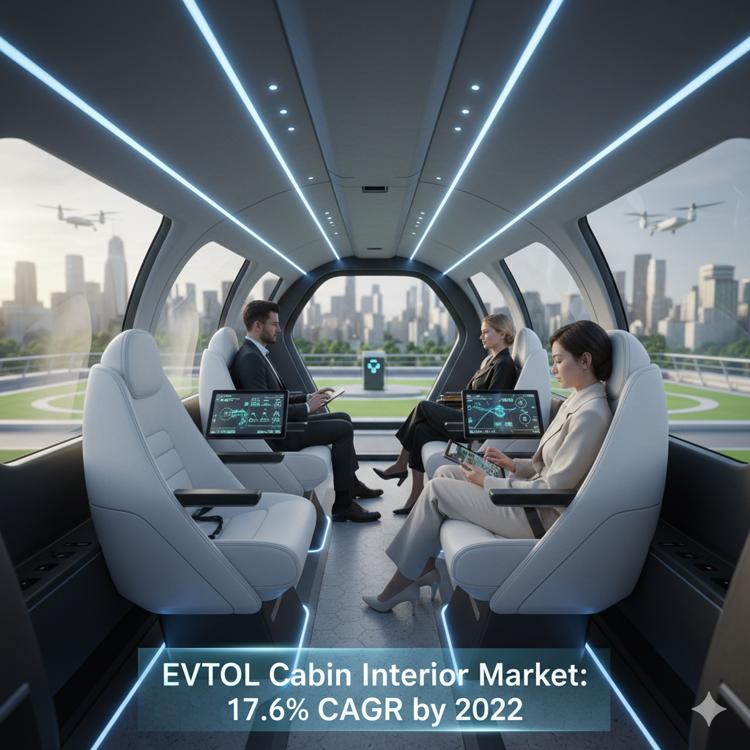
The aviation industry is on the brink of a radical transformation. Urban air mobility (UAM), once a futuristic vision, is rapidly becoming a reality. At the center of this transformation lies a key element often overlooked but critically important: the cabin interior of electric Vertical Take-Off and Landing (eVTOL) aircraft.
According to market research, the global eVTOL cabin interior market was valued at USD 304.5 million in 2024 and is projected to surge to USD 1,113.9 million by 2032, expanding at a remarkable CAGR of 17.6%. This rapid growth reflects not only technological advancements but also shifting priorities in mobility, passenger experience, sustainability, and infrastructure.
In this in-depth analysis, we’ll explore why the eVTOL cabin interior market is growing so quickly, the factors fueling this expansion, regional trends, technological innovations, and what this means for the future of air travel.
1. What Is Driving the Boom in the eVTOL Cabin Interior Market?
eVTOL aircraft are designed for short-distance, point-to-point travel in urban and regional environments. As the industry matures, attention is shifting from just the aircraft’s propulsion and airframe to the cabin experience—the human-centered space where passengers spend their journey.
Several factors are driving this market surge:
1.1 Urban Air Mobility Takes Flight
The global adoption of UAM concepts, including air taxis and regional air shuttles, is one of the biggest drivers of eVTOL adoption. Cities are investing in air mobility infrastructure to combat congestion and enable faster, cleaner urban transportation. As passenger demand grows, so does the need for comfortable, safe, and innovative cabin designs.
1.2 Lightweight and Modular Design Trends
Efficiency is paramount for electric aircraft. Cabin interior components—such as seats, panels, lighting, and insulation—must be lightweight and modular to minimize energy consumption and extend flight range. Manufacturers are increasingly using composite materials, advanced polymers, and additive manufacturing to meet these requirements.
1.3 Passenger-Centric Experience
Air taxi passengers expect comfort and convenience similar to, or better than, traditional air travel. This means:
- Spacious layouts and ergonomic seating
- Customizable lighting and climate control
- Infotainment and connectivity
- Noise reduction and vibration damping systems
The cabin is no longer just a space for transportation—it’s a platform for premium mobility experiences.
1.4 Safety and Regulatory Readiness
As eVTOL aircraft move toward certification, safety standards are becoming stricter. This drives demand for fire-resistant materials, crashworthy seating, integrated emergency systems, and advanced cabin monitoring technologies. Compliance with regulations is accelerating the adoption of high-quality, certified interior solutions.
2. How Big Is the Market—and How Fast Is It Growing?
The market size of USD 304.5 million in 2024 is expected to more than triple to USD 1,113.9 million by 2032. This explosive growth reflects increasing commercial deployment of eVTOL aircraft for passenger transport, logistics, and emergency services.
2.1 Key Market Indicators:
Year
Market Size (USD Million)
CAGR
2024
304.5
-
2032
1113.9
17.6%
- Historical period: 2020–2023
- Base year: 2024
- Forecast period: 2025–2032
This growth trajectory aligns with parallel investments in battery technology, infrastructure development, and UAM ecosystem integration.
3. Which Technologies Are Transforming eVTOL Cabin Interiors?
The future of eVTOL cabins is not just about style—it’s about smart engineering and human-centered innovation. Several technologies are reshaping how these cabins are designed, manufactured, and experienced.
3.1 Advanced Lightweight Materials
To extend flight range and optimize efficiency, cabin manufacturers are embracing:
- Carbon-fiber reinforced polymers (CFRP) for structural components
- Honeycomb panels for walls and floors
- Recyclable composites to enhance sustainability
These materials reduce weight without compromising strength or safety.
3.2 Modular Cabin Configurations
Unlike traditional aircraft, eVTOLs can feature reconfigurable interiors. Cabin modules can be swapped for different missions:
- Passenger air taxi
- Medical evacuation
- Cargo transport
- VIP charter
This modularity increases operational flexibility for operators and manufacturers alike.
3.3 Smart Cabin Systems
Digital integration is at the heart of modern cabin design:
- Wireless connectivity for passenger devices
- Touchless control systems for comfort and safety
- Smart lighting and ambient systems that adjust dynamically
- Advanced air filtration and climate control
These systems aim to offer passengers a personalized, connected travel experience.
3.4 Infotainment and UX Enhancements
eVTOL operators are positioning their aircraft as premium mobility experiences. Infotainment systems—including AR/VR interfaces, real-time route visualization, and in-flight entertainment—will play a key role in attracting urban travelers.
4. Which Regions Are Leading the Market?
The growth of the eVTOL cabin interior market is not uniform. Certain regions are emerging as clear leaders, while others are rapidly catching up.
4.1 North America: The Market Leader (41% Share)
North America currently leads the market, thanks to:
- Strong R&D activity
- Supportive regulatory frameworks
- Early commercialization initiatives in the United States
Major aerospace companies and startups are collaborating to standardize cabin design, streamline certification, and integrate advanced passenger experiences. Partnerships between OEMs, interior specialists, and material suppliers are driving rapid product development.
4.2 Europe: Advancing with Regulatory Support
Europe follows closely behind, with active pilot projects in Germany, France, and the United Kingdom. The region benefits from:
- Proactive aviation regulations supporting UAM
- Emphasis on eco-friendly materials and sustainability
- A strong network of aerospace suppliers and research institutions
European interior designers are focusing on minimalistic, sustainable, and passenger-friendly layouts.
4.3 Asia-Pacific: Fastest-Growing Region
Asia-Pacific is expected to witness the fastest market growth, driven by:
- Heavy investments in eVTOL infrastructure in China, Japan, and South Korea
- Expanding manufacturing capabilities
- Strong government backing for smart city initiatives
As urban populations grow rapidly, these countries view eVTOL as a strategic solution for urban congestion and intercity mobility.
5. Who Are the Key Players in the Market?
A mix of aerospace giants, cabin interior specialists, and emerging startups is shaping the competitive landscape. While traditional aircraft interior suppliers are adapting to eVTOL needs, new entrants are introducing fresh, modular, and digital-first design approaches.
Some notable players include:
- Leading eVTOL aircraft manufacturers integrating in-house cabin solutions.
- Specialized interior suppliers focusing on lightweight seating, panels, and systems.
- Material innovators developing composite and sustainable materials tailored to eVTOL needs.
Collaborations between OEMs and interior designers are becoming more common, accelerating certification and deployment timelines.
6. What Are the Major Challenges Holding the Market Back?
Despite its rapid growth, the eVTOL cabin interior market faces several challenges that could impact its pace of adoption.
6.1 High Development and Certification Costs
eVTOL interiors must comply with strict aviation safety standards. Meeting these requirements involves expensive testing, certification, and engineering.
6.2 Infrastructure Gaps
Widespread deployment requires:
- Vertiports and charging stations
- Standardized boarding interfaces
- Integration with urban mobility networks
Without sufficient infrastructure, cabin innovations may not reach their full potential.
6.3 Passenger Acceptance and Trust
While the technology is advancing, widespread public acceptance remains a challenge. Ensuring comfort, safety, and accessibility in cabin interiors will be key to building trust in eVTOL services.
6.4 Standardization and Interoperability
The lack of universal standards for eVTOL cabin design can delay mass adoption. Establishing common frameworks for safety, layout, and modularity is essential for scaling operations.
7. How Are Partnerships Accelerating Innovation?
Strategic collaborations are proving instrumental in shaping the future of eVTOL cabin interiors. Aerospace OEMs are partnering with:
- Interior design firms to create customized passenger experiences
- Material suppliers to reduce weight and increase sustainability
- Technology companies to integrate smart cabin systems
These partnerships help companies shorten development cycles, align with regulatory requirements, and deliver innovative interiors that meet passenger expectations.
8. What Role Does Sustainability Play in Cabin Design?
Sustainability is no longer optional—it’s a core requirement. As aviation faces increasing pressure to reduce emissions and waste, eVTOL cabins are being designed with:
- Recyclable and bio-based materials
- Energy-efficient lighting and systems
- Smart climate control to reduce power draw
- Minimalistic designs that optimize weight and resources
This not only improves aircraft efficiency but also aligns with the broader environmental goals of smart cities and green aviation.
9. What Does This Mean for the Future of Air Travel?
The rapid growth of the eVTOL cabin interior market signals a profound shift in the way people will experience flight in the coming decade. By 2032, urban air mobility could transform daily commutes, business travel, and even tourism.
9.1 Urban Air Mobility as a Premium Service
eVTOL cabins will set new standards for comfort, personalization, and convenience. Air taxis may offer:
- Seamless app-based booking
- Personalized cabin environments
- Real-time route information and entertainment
9.2 Decentralized Aviation Infrastructure
Instead of relying solely on large airports, eVTOL aircraft will operate from vertiports in urban and suburban areas. Cabin designs will reflect short-haul, high-turnover operations, emphasizing durability, safety, and easy maintenance.
9.3 Integration with Multimodal Transport
eVTOLs will not replace traditional transportation—they will integrate with existing networks. Cabin interiors will support fast boarding, passenger flow optimization, and digital ticketing systems that sync with other modes of transport.
10. Looking Ahead: The Road to 2032
The eVTOL cabin interior market’s projected 17.6% CAGR is more than just a statistic—it reflects a global shift in how we move, connect, and design transportation systems. By 2032:
- eVTOL aircraft will be a mainstream mobility option in many major cities.
- Cabin interiors will be smarter, lighter, and more sustainable.
- Regional competition will intensify, driving further innovation and cost reduction.
- Standardization and regulatory clarity will accelerate adoption.
As eVTOL technology matures, the cabin interior will be a key differentiator—turning a simple flight into a memorable, seamless mobility experience.
The Future of Urban Air Travel: How Market Drivers and Trends Are Shaping the eVTOL Cabin Interior Industry
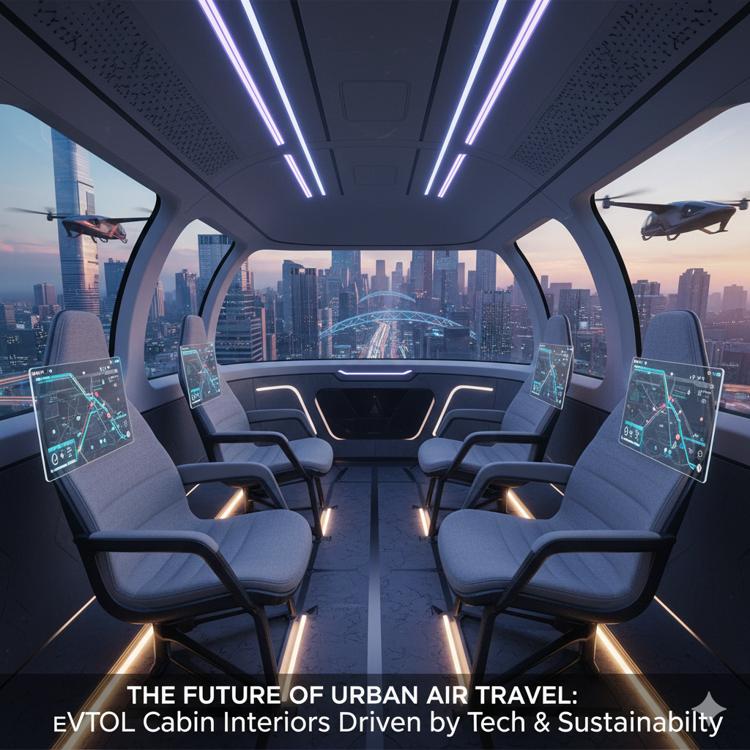
The aviation landscape is undergoing one of its most significant shifts in decades, and at the center of this transformation is the rise of electric Vertical Take-Off and Landing (eVTOL) aircraft. As the world moves toward urban air mobility (UAM), the focus is no longer just on propulsion and flight technology. Cabin interiors—designed to provide comfort, safety, and sustainability—are emerging as a decisive factor in shaping passenger experience and accelerating market adoption.
The eVTOL cabin interior market is expanding rapidly due to a combination of strong market drivers and transformative trends. From sustainability initiatives and lightweight materials to digital integration and passenger safety standards, these factors are setting the foundation for the future of aerial transportation.
1. Rising Demand for Urban Air Mobility Solutions
Urban Air Mobility Gains Momentum
Cities worldwide are facing increasing congestion, pollution, and strained ground transportation networks. eVTOL aircraft offer an efficient, clean, and scalable mobility solution to address these challenges. Urban air taxis and shuttle services are gaining attention from governments, operators, and passengers alike.
As aerial mobility becomes more viable, the cabin interior plays a central role in passenger acceptance. Unlike traditional aircraft, eVTOLs are expected to operate short, frequent routes with high turnaround rates. This demands:
- Comfortable and ergonomic seating for short trips
- Smart interior layouts that optimize space
- Noise-reduction systems to ensure a smooth ride
- Enhanced safety measures for quick ingress and egress
Passengers will choose air taxis not just for speed but for the quality of their in-flight experience, making cabin design a key commercial differentiator.
2. Focus on Passenger Safety and Comfort Standards
Safety Standards Drive Innovation
Safety is a top priority in aviation, and eVTOLs are no exception. Regulators and operators are placing greater emphasis on both passenger safety and comfort, encouraging manufacturers to rethink how cabins are built.
Key safety-focused developments include:
- Use of lightweight but durable materials
- Crashworthy seating that meets strict aviation standards
- Fire-resistant components and materials that meet certification requirements
- Fast ingress and egress designs to support efficient turnaround
Example:
Bombardier Transportation’s crashworthy seating systems are tested to sustain dynamic sled impacts without exceeding a head injury criterion (HIC15) value of 700, as required by APTA PR-CS-S-016-99 Rev. 3.1. This ensures enhanced occupant protection in real-world emergencies—a level of safety engineering that is becoming standard in modern cabin designs.
Comfort Enhances Passenger Acceptance
Passenger trust and comfort are essential for the widespread adoption of urban air mobility. Cabin interiors are designed to minimize vibration, reduce noise, and maximize space utilization while maintaining regulatory compliance. This dual emphasis on comfort and safety is pushing manufacturers to innovate at every level of the design process.
3. Technological Integration and Smart Cabin Features
A New Era of Connected Interiors
Modern passengers expect more than just transportation—they expect a connected experience. As a result, cabin design in eVTOL aircraft is being reimagined through digital integration and smart technologies.
Emerging technologies include:
- In-flight connectivity for passengers to stay online
- Real-time navigation displays and digital interfaces
- Smart lighting systems that enhance mood and reduce fatigue
- Noise-canceling features and customizable seating configurations
These innovations not only enhance comfort but also help differentiate operators in a competitive mobility landscape.
Example:
Lilium’s eVTOL cabin is engineered to deliver a quiet, smooth ride through its proprietary engine design. Unlike conventional aircraft, it achieves low noise levels without active noise-cancellation systems from external providers like Collins Aerospace. This kind of inherent acoustic engineering is becoming a benchmark in premium eVTOL cabin design.
Collaboration Between Aerospace and Tech Firms
To deliver such advanced experiences, aerospace manufacturers are increasingly partnering with technology providers. These collaborations accelerate the development of integrated cabin solutions and ensure compatibility with digital ecosystems already familiar to passengers.
4. Sustainability and Lightweight Material Adoption
Eco-Friendly Cabins for a Cleaner Sky
Sustainability is not just a trend—it is a core pillar of the eVTOL industry. Manufacturers are moving away from traditional materials to adopt:
- Eco-friendly composites
- Recycled fabrics
- Bio-based materials
These materials help reduce the aircraft’s overall weight, improving energy efficiency and extending battery range. This is especially crucial in eVTOLs, where every kilogram saved contributes to increased flight endurance and operational cost reduction.
Weight Reduction = Better Performance
The aviation industry has long recognized the link between weight reduction and efficiency. In the eVTOL sector, where energy is stored in batteries, lightweight cabin components directly translate into longer range, lower operational costs, and reduced environmental impact.
Example:
Expliseat’s TiSeat E1—certified by EASA in March 2014—weighs only 4 kg per seat, making it 50% lighter than conventional models weighing 8–10 kg. Built with titanium and carbon-fiber composites, this design significantly reduces weight while maintaining durability and safety. Such material innovations are now being adapted for eVTOL interiors.
5. Trend 1: Integration of Advanced Technologies and Customizable Cabin Features
Digital-First Cabin Design
The eVTOL cabin interior market is witnessing a clear shift toward technology-driven designs. As operators compete to deliver superior passenger experiences, cabins are becoming smarter, more flexible, and more interactive.
Features gaining traction include:
- Touchscreen digital displays
- Mood lighting and smart ambient systems
- In-flight Wi-Fi and connectivity
- Customizable cabin configurations for different passenger segments
Operators are using these technologies to adapt cabins for various use cases—from business travel and tourism to medical transport. This flexibility maximizes aircraft utilization and revenue potential.
Example:
In February 2021, Joby Aviation partnered with Garmin to integrate the G3000 touchscreen avionics system into its eVTOL aircraft. This advanced avionics suite can be configured with multiple displays, providing enhanced passenger control and interaction. It represents a new era of digitally enabled flight experiences.
Passenger-Centric Solutions
The emphasis on customization reflects a broader shift toward passenger-centric air mobility. Cabin layouts are designed not just for efficiency but also for personalization, catering to diverse needs:
- Business travelers seeking productivity
- Tourists desiring immersive experiences
- Emergency medical services requiring fast, safe layouts
6. Trend 2: Growing Emphasis on Sustainability and Lightweight Materials
A Commitment to Green Mobility
Sustainability is shaping every aspect of eVTOL interior development. Cabin designs are increasingly:
- Incorporating recycled and low-emission materials
- Following eco-friendly production methods
- Using modular components to reduce waste and extend lifecycle
This aligns with the global aviation sector’s commitment to decarbonization and the growing regulatory push for cleaner urban transport solutions.
Material Science Innovations
Advances in material science are enabling interiors that are both lightweight and durable, supporting efficiency and environmental goals without compromising safety or passenger comfort.
Example:
The Expliseat TiSeat E1, thanks to its titanium and carbon-fiber composite structure, represents how weight optimization can extend component life cycles and reduce operational emissions. Such innovations are critical as operators look for long-term cost efficiency and sustainability gains.
7. How These Drivers and Trends Interconnect
The drivers and trends shaping the eVTOL cabin interior market are not isolated—they reinforce each other:
- Urban air mobility demand creates pressure for comfortable, safe, and efficient cabins.
- Safety standards accelerate material innovation and engineering advancements.
- Technological integration improves passenger experience and helps operators differentiate their offerings.
- Sustainability initiatives push suppliers to develop lighter, greener, and longer-lasting interior solutions.
These interconnected forces are creating a feedback loop of innovation, enabling rapid market growth and more competitive offerings.
8. Implications for Manufacturers and Operators
For Manufacturers:
- Material innovation is non-negotiable. Lightweight, sustainable components are becoming industry standards.
- Partnerships are essential. Collaborating with tech providers accelerates integration and differentiation.
- Regulatory compliance must be embedded early. Meeting strict safety standards ensures faster certification and market entry.
For Operators:
- Passenger experience drives adoption. Comfort, safety, and connectivity will determine market success.
- Customization offers flexibility. Modular interiors enable multiple service models using the same aircraft fleet.
- Sustainability can be a competitive edge. Eco-friendly designs appeal to both regulators and customers.
9. The Road Ahead: What This Means for Urban Air Travel
The eVTOL cabin interior market is evolving from a niche segment to a strategic enabler of the broader UAM ecosystem. By 2030 and beyond, we can expect:
- Widespread use of smart, connected, and customizable cabins
- A shift toward fully sustainable interior materials and production methods
- Standardized safety and comfort protocols across markets
- Greater integration with digital mobility ecosystems
eVTOL interiors won’t just support flights—they will define the passenger experience, much like luxury cabins define premium airline brands today.
Source: https://www.credenceresearch.com/report/evtol-cabin-interior-market
Why the eVTOL Cabin Interior Market Is Taking Off — And What’s Fueling Its Growth
The global eVTOL (electric Vertical Take-Off and Landing) market is entering a new era — and cabin interiors are at the heart of this transformation. As urban air mobility evolves from futuristic concept to tangible reality, demand for lightweight, safe, and passenger-centric cabin solutions is surging.
But along with opportunities come real challenges. High development costs, regulatory barriers, limited infrastructure, and consumer trust gaps all shape the growth path of this market.
1. Market Challenges Holding Back Faster Growth
1.1 High Development Costs and Certification Barriers
- Advanced Engineering Requirements: Designing interiors for eVTOL aircraft involves lightweight materials, crashworthiness, fire resistance, and modularity. Achieving these standards pushes R&D costs upward.
- Regulatory Complexity: Certification requirements from aviation authorities make the process lengthy and expensive. Interiors must meet stringent safety and performance standards.
- Commercialization Delays: Regulatory hurdles often slow product launches, increasing financial risk for both startups and established OEMs.
- Unequal Playing Field: Smaller firms struggle to match the compliance and certification resources of larger corporations, leading to reduced competition and innovation.
1.2 Limited Infrastructure and Consumer Acceptance
- Vertiport Shortage: Without sufficient landing and charging infrastructure, widespread deployment of eVTOLs remains difficult.
- Return on Investment Challenges: Cabin interior investments may not yield immediate returns if operational infrastructure lags.
- Public Perception Barriers: Many consumers still question the safety, comfort, and noise levels of eVTOLs.
- Trust & Education Gap: Building awareness and familiarity through pilot projects and transparent communication will be crucial for adoption.
2. Market Opportunities Driving Rapid Expansion
2.1 Urban Air Mobility (UAM) and Premium Travel Services
- Urban Congestion Solutions: Cities are investing in aerial transport networks to alleviate traffic congestion, boosting demand for comfortable, efficient interiors.
- Premium Passenger Experience: Air taxis and corporate shuttle operators are focusing on high-end cabin experiences, creating opportunities for specialized interior designs.
- Customization Potential: Interiors can be configured for luxury, business, or commuter travel — unlocking multiple revenue streams for OEMs and suppliers.
- Enhanced Passenger Experience: Integrated entertainment systems, smart lighting, ergonomic seating, and ambient design features can differentiate brands in a competitive market.
2.2 Sustainable and Modular Cabin Designs
- Eco-Friendly Materials: Bio-composites, recycled fabrics, and lightweight components align with environmental regulations and sustainability goals.
- Energy Efficiency Gains: Lightweight interiors improve battery efficiency, allowing for longer flight ranges and lower operating costs.
- Modularity for Flexibility: Swappable cabin modules support different missions — from passenger transport to medical evacuation or cargo delivery.
- Strategic Positioning: Sustainable interior solutions help OEMs strengthen their brand reputation and attract eco-conscious investors.
3. Market Segmentation: How the Industry Breaks Down
The eVTOL cabin interior market is structured across type, platform, material, and region.
3.1 By Type
- Seating Systems:
- Highest demand segment.
- Focus on ergonomic, crashworthy, and lightweight designs.
- Designed for both comfort and safety compliance.
- Cabin Lighting:
- Enhances passenger ambiance and visibility.
- Smart LED lighting zones allow personalized experiences.
- In-Flight Entertainment:
- Growing as operators prioritize passenger engagement.
- Enables differentiation in competitive premium travel markets.
- Storage Units:
- Critical for operational efficiency and passenger convenience.
- Supports compact but functional cabin layouts.
- Safety Systems:
- Integral for regulatory certification.
- Includes oxygen systems, emergency exits, and fireproofing solutions.
Example: The Lilium Jet features a 3 m-long uninterrupted cabin with three LED lighting zones, allowing operators to tailor ambiance for different flight segments.
3.2 By Platform
- Air Taxis:
- Leading segment due to rapid commercialization.
- Interiors emphasize passenger comfort, quick boarding, and modularity.
- Cargo eVTOLs:
- Prioritize durable and space-optimized interior designs.
- Focus on efficiency, not luxury.
- Personal/Private Aircraft:
- Drive demand for customizable and luxury interior features.
- Cater to high-net-worth individuals and corporate executives.
Example: Chaparral by Elroy Air features a cargo pod system capable of automated loading and deployment, supporting up to 136 kg payload per flight cycle.
3.3 By Material
- Composites:
- Lead the market due to lightweight strength.
- Enhance battery range and efficiency.
- Polymers:
- Support durability and versatility in cabin components.
- Often used in interior panels and fittings.
- Metals:
- Provide structural integrity where necessary.
- Used selectively to balance weight and strength.
- Sustainable Fabrics:
- Gaining traction as sustainability pressures increase.
- Improve aesthetic appeal and brand positioning.
4. Market Segmentation by Region
4.1 North America — 41% Market Share (2024)
- Early investments in UAM infrastructure.
- Strong participation from major aerospace OEMs.
- Regulatory support and pilot projects drive early adoption.
- High R&D funding fuels innovation in passenger safety and comfort.
- Consumers show rising interest in air taxi services.
4.2 Europe — 28% Market Share
- Stringent regulatory frameworks foster trust and safety standards.
- Leading nations: Germany, France, UK.
- Focus on eco-friendly and modular cabin solutions.
- Strong R&D ecosystem with government-industry collaborations.
- Growing premium and corporate travel segments.
4.3 Asia-Pacific — 22% Market Share
- High urban population density drives UAM demand.
- Key players: China, Japan, South Korea.
- Government support and local manufacturing strength accelerate adoption.
- Strong emphasis on comfort, technology integration, and cost efficiency.
- Expected to outpace other regions in growth rate over the next decade.
4.4 Latin America, Middle East & Africa (Remaining Share)
- Gradual adoption of UAM initiatives.
- Infrastructure development still in early phases.
- Attractive potential for cargo eVTOL and tourism-driven services.
- Growing interest in sustainable aviation solutions.
5. Key Players Shaping the Market
Leading companies are investing heavily in innovation, materials research, and cabin customization to gain a competitive edge.
- The Boeing Company — leveraging aerospace expertise for UAM cabin innovation.
- Panasonic Corporation — focusing on advanced in-flight entertainment and lighting systems.
- Thales Group — driving avionics and cabin connectivity solutions.
- JCB Aero — specializing in customized cabin interiors.
- Hong Kong Aircraft Engineering Company Limited — expanding into eVTOL interior design and retrofit capabilities.
- Gogo Inc. — enhancing passenger connectivity.
- Astronics Corporation — innovating cabin lighting and power systems.
- Collins Aerospace — leading in safety systems and integrated cabin structures.
- Honeywell International Inc. — providing avionics, cabin controls, and safety systems.
- Cobham PLC — delivering advanced aerospace interiors and connectivity solutions.
These companies are at the forefront of R&D, partnerships, and market deployment strategies.
6. Why This Market Matters for the Future of Air Travel
The eVTOL cabin interior market is not just about seats and lights — it’s about creating a new category of transportation experience.
Here’s why this sector is critical:
- Passenger Trust: Comfort and safety will drive public acceptance of eVTOLs.
- Economic Viability: Lightweight interiors lower operational costs, making UAM financially feasible.
- Sustainability Goals: Eco-friendly materials align with aviation decarbonization strategies.
- Market Differentiation: Cabin design can become a powerful competitive advantage for operators.
- Urban Integration: Modular interiors enable multi-purpose use cases — from medical airlift to VIP travel.
7. Key Takeaways for Stakeholders
Stakeholder
Opportunity
Strategic Focus
OEMs
Market leadership through design innovation
Modular, lightweight, certified interiors
Interior Suppliers
Niche customization & branding
Premium travel, eco-friendly materials
Regulators
Ensuring safety and accelerating adoption
Streamlined certification frameworks
Investors
High-growth segment with long-term potential
Early bets on tech-ready suppliers
Governments & Cities
Urban mobility transformation
Infrastructure + policy support
Who Will Lead the Skies? Inside the Competitive Race Shaping the eVTOL Cabin Interior Market
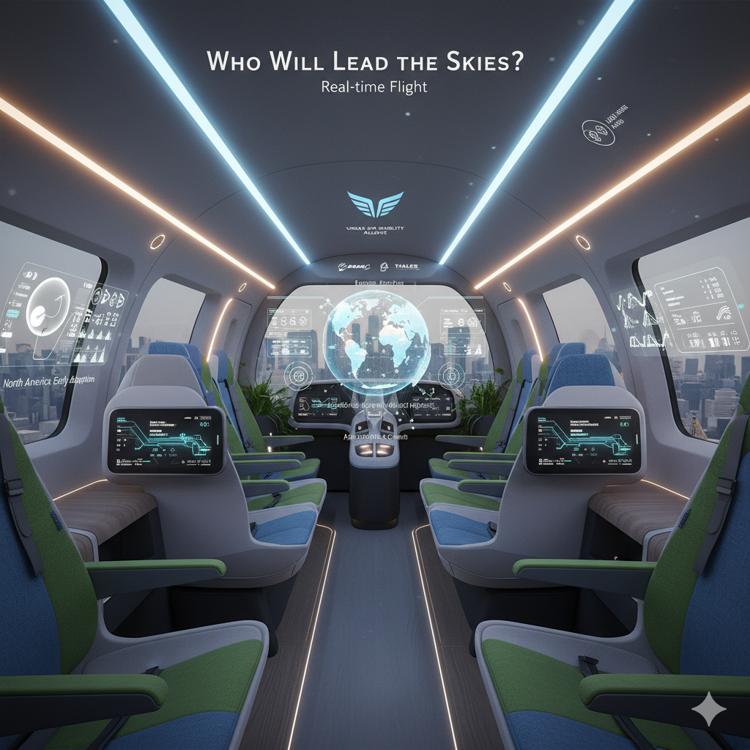
The rise of eVTOL (electric Vertical Take-Off and Landing) aircraft is transforming urban air mobility from futuristic vision into commercial reality. And while propulsion systems and flight control often dominate headlines, there’s a quieter but equally critical revolution happening inside the cabin.
Passenger experience, sustainability, and safety are driving fierce competition among global aerospace and technology giants. Companies are racing to design cabin interiors that not only meet strict regulatory standards but also set new benchmarks in comfort and operational efficiency.
This article explores key questions defining the competitive dynamics, technological shifts, and future outlook of the eVTOL cabin interior market.
1. Which Companies Are Dominating the Competitive Landscape?
The eVTOL cabin interior market is currently shaped by a select group of influential players, each leveraging its expertise in aerospace, technology, and materials engineering.
- The Boeing Company — leading the market through major investments and collaborations with urban air mobility projects.
- Panasonic Corporation — specializing in in-flight infotainment and cabin lighting systems tailored for electric aircraft.
- Thales Group — a frontrunner in avionics integration and passenger connectivity solutions.
- JCB Aero — focused on customized cabin interiors with lightweight modular layouts.
- Hong Kong Aircraft Engineering Company Limited — expanding from traditional aviation into eVTOL interior retrofitting and innovation.
- Gogo Inc. — advancing connectivity and real-time digital systems for aerial mobility.
These companies compete through innovation in lightweight materials, sustainable components, advanced safety systems, and passenger-focused technologies. Strategic partnerships with eVTOL manufacturers have become central to delivering interiors that align with evolving regulations, performance standards, and passenger expectations.
2. How Are Competitive Strategies Shaping the Market?
The competition isn’t just about who can build the sleekest interior — it’s about who can build the most scalable, regulatory-compliant, and efficient cabin solution.
Key strategies defining the competitive race include:
- Collaborations with OEMs: Strategic partnerships enable suppliers to co-develop solutions tailored to specific aircraft models.
- Modular and Lightweight Design: Reducing weight extends flight range and lowers operational costs — a decisive factor for urban air mobility operators.
- R&D Investment: Heavy funding into materials science, digital interfaces, and safety systems gives companies a technological edge.
- Sustainability Commitments: Using eco-friendly materials like bio-composites and recycled fabrics positions brands ahead of tightening environmental regulations.
- Portfolio Expansion: Acquiring or partnering with startups and tech firms helps large companies diversify offerings and accelerate innovation.
This blend of aerospace heritage and digital disruption is defining who leads — and who falls behind — in this fast-growing market.
3. What Are the Latest Developments Driving Momentum?
The industry has witnessed notable developments that signal accelerating investment and strategic positioning:
- September 2025: The Boeing Company and Macquarie AirFinance announced an order for 30 Boeing 737 MAX aircraft to expand fleet solutions — a move reflecting growing infrastructure readiness for hybrid and future eVTOL integrations.
- August 2025: Korean Air committed to a record purchase of 103 Boeing jets, strengthening fleet modernization and strategic alignment with new aerial mobility solutions.
These developments highlight how traditional aviation leaders are positioning themselves for the next wave of mobility, integrating their scale, supply chains, and R&D capabilities into eVTOL advancements.
4. What Does the Market Report Reveal About Industry Dynamics?
According to Credence Research, the eVTOL cabin interior market report provides a comprehensive breakdown across type, platform, material, and region.
Key insights include:
- SWOT and Competitive Environment: Identifying strengths, weaknesses, opportunities, and threats of leading players.
- Market Drivers and Constraints: Highlighting the impact of regulations, consumer acceptance, cost pressures, and infrastructure development.
- Technological Advancements: Focusing on lightweight modular structures, digital entertainment systems, and eco-material innovation.
- External Economic Factors: Analyzing global economic trends that influence investment and commercialization timelines.
For businesses and investors, the report acts as a strategic roadmap, revealing where the market is heading and how to navigate it effectively.
5. How Will Smart Technologies Transform the Cabin Experience?
As eVTOL aircraft evolve from experimental vehicles to mainstream urban mobility solutions, cabin interiors are becoming a key battleground for innovation.
Expect major shifts in:
- Digital Infotainment: Real-time displays, interactive panels, and personalized content delivery.
- Connectivity: High-speed inflight Wi-Fi, integrated passenger-device syncing, and AR/VR interfaces.
- Automation: Smart lighting, cabin temperature control, and adjustable seating layouts.
- Safety Integration: Digital monitoring systems embedded into cabin structures for real-time alerts and diagnostics.
These innovations will elevate the passenger experience, enabling operators to offer premium and personalized services — a critical differentiator in competitive urban air mobility networks.
6. Why Is Sustainability Becoming a Competitive Advantage?
Sustainability is no longer a marketing angle — it’s a market requirement.
- Eco-Friendly Materials: The industry is moving toward bio-composites, recycled fabrics, and low-emission manufacturing processes.
- Operational Efficiency: Lightweight cabin designs directly translate to longer flight ranges and lower energy consumption.
- Regulatory Alignment: Global aviation regulators are pushing for greener aircraft components to support carbon neutrality goals.
- Brand Reputation: Operators and suppliers that commit to sustainability are better positioned for strategic partnerships and investment.
As cities and operators align with climate goals, companies that innovate sustainably will lead the next wave of growth.
7. How Will Partnerships Accelerate Industry Maturity?
The future of eVTOL cabin interiors will not be built in isolation. Collaboration between aerospace OEMs, tech firms, and design studios is emerging as the dominant growth model.
These partnerships enable:
- Faster Certification: Joint development ensures designs meet regulatory standards more efficiently.
- Technology Integration: OEMs gain access to advanced infotainment and material technologies through specialized partners.
- Cost Optimization: Shared R&D lowers development costs and shortens time to market.
- Global Scaling: Partnerships with infrastructure providers and operators support rapid deployment in major cities.
The result? A more integrated ecosystem, where cabin interiors become a core part of the broader urban air mobility strategy.
8. Which Global Regions Will Drive Market Expansion?
Geographically, market expansion is expected to be regionally diverse but globally synchronized:
- North America:
- Early UAM pilot programs and regulatory support.
- High adoption rates in premium and business travel.
- Strong presence of leading aerospace OEMs.
- Europe:
- Focus on sustainability and modular solutions.
- Collaborative R&D between manufacturers and research institutions.
- Stringent safety and eco-design regulations driving innovation.
- Asia-Pacific:
- Expected to lead in growth rate, fueled by urban infrastructure investments.
- Rapid adoption in cities like Tokyo, Seoul, and major Chinese hubs.
- Strong government and private sector backing.
- Middle East, Africa, and Latin America:
- Gradual but steady adoption, particularly in tourism and cargo applications.
- Infrastructure development is currently the key challenge.
This global spread reflects how eVTOL cabin interiors are becoming a universal industry priority, not just a niche innovation.
9. What Does the Future of the eVTOL Cabin Interior Market Look Like?
Looking ahead, the eVTOL cabin interior market is on track for significant evolution across multiple dimensions:
- Growing Adoption: Passenger-centric cabin designs will become standard as more cities integrate eVTOLs into transportation networks.
- Lightweight and Modular: Interiors will prioritize energy efficiency and operational flexibility.
- Smart Technologies: Infotainment, connectivity, and automation will enhance passenger experience.
- Sustainability: Eco-materials will move from optional to essential.
- Collaborations: OEM-designer-tech firm partnerships will accelerate innovation.
- Urban Integration: Premium air taxi and business-class services will drive demand.
- Reconfigurable Cabins: Flexible layouts will support tourism, corporate, and emergency applications.
- Asia-Pacific Leadership: Infrastructure growth in this region will push global expansion.
- Safety as Core: Regulatory and passenger safety standards will remain central to design.
The market’s evolution isn’t just about building better cabins — it’s about redefining the aerial mobility experience itself.
10. What Should New Entrants and Investors Focus On?
For startups, OEMs, and investors eyeing this high-growth segment, here are strategic priorities to stay ahead:
Strategic Focus Area
Why It Matters
Example Actions
Modular Cabin Designs
Flexibility drives operator profitability
Invest in reconfigurable layouts
Sustainable Materials
Aligns with regulatory and consumer trends
Develop eco-certified products
Tech Integration
Differentiates passenger experience
Partner with infotainment/IoT providers
Certification Expertise
Reduces time-to-market
Collaborate with OEMs on joint programs
Regional Partnerships
Enables faster scaling
Target UAM pilots in Asia-Pacific
Positioning early in these areas can provide a competitive edge as the market matures.
Conclusion:The eVTOL cabin interior market is poised for robust growth between 2024 and 2032, with the market expected to expand from USD 304.5 million to USD 1,113.9 million at a compounded annual growth rate of 17.6 %. This expansion

 Arabic
 French
 Spanish
 Portuguese
 Deutsch
 Turkish
 Dutch
Dutch
 Italiano
 Russian
 Romaian
 Portuguese (Brazil)
 Greek
Greek