


 Leader Board
How Ultralight and Light Aircraft Are Redefining Regional Mobility and Air Tourism
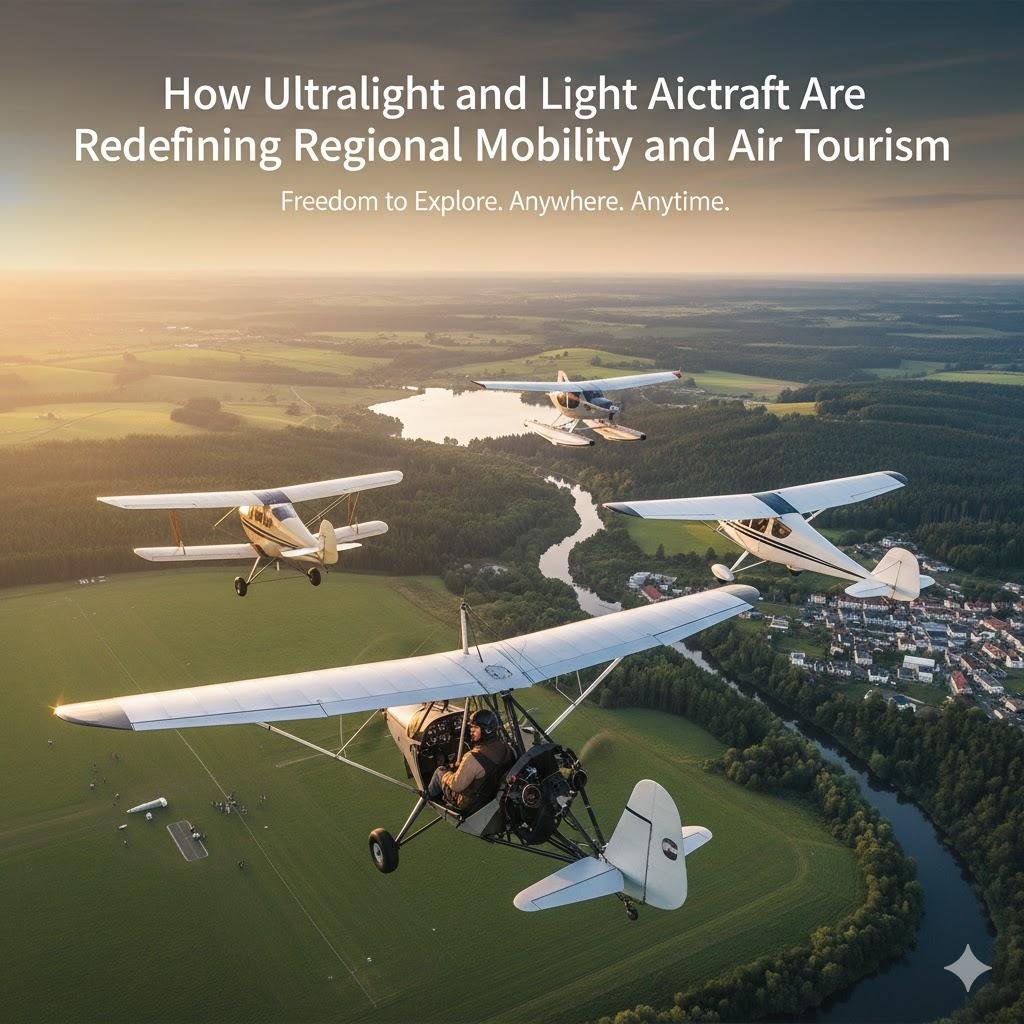
Introduction: The Dawn of a New Aviation Age
In the past, aviation was synonymous with large commercial jets, expensive tickets, and long-haul routes. But in recent years, a quieter revolution has been taking off — one powered by ultralight and light aircraft. These nimble, efficient, and increasingly electric-powered flying machines are transforming how people think about travel, recreation, and connectivity.
According to Credence research, the Ultralight and Light Aircraft Market is on a steady ascent. Valued at USD 17.5 billion in 2024, it is projected to reach USD 31 billion by 2032, growing at a CAGR of 7.4% during the forecast period. This rise isn’t just about numbers — it’s about redefining how mobility, tourism, and personal freedom in the sky intersect.
As technology, regulation, and consumer interest align, ultralight and light aircraft are becoming symbols of accessible aviation, connecting smaller regions, empowering adventure tourism, and reigniting the joy of flying.
Source: Ultralight and Light Aircraft Market Size, Growth and Forecast 2032
1. Understanding the Ultralight and Light Aircraft Segment
What Defines These Aircraft
- Ultralight Aircraft are small, lightweight planes designed for one or two passengers. They typically weigh under 600 kilograms (1,320 lbs) and are used primarily for recreation, training, and personal transport.
- Light Aircraft, on the other hand, are a step up — often accommodating 2 to 10 passengers. They serve diverse roles, including pilot training, private business travel, and even regional air taxi services.
Both categories prioritize simplicity, fuel efficiency, and short takeoff/landing (STOL) capabilities, making them ideal for rural or underdeveloped airstrips.
Market Scope and Dynamics
The market covers:
- Aircraft Types: Ultralight Aircraft, Light Aircraft
- Technologies: Conventional Take-Off and Landing (CTOL), Vertical Take-Off and Landing (VTOL)
- Applications: Civil & Commercial Aviation, and Military
- Regions: North America, Europe, Asia-Pacific, Latin America, and Middle East & Africa
As aviation technology becomes more affordable, modular, and environmentally friendly, ultralight and light aircraft are democratizing flight access.
2. The Market Overview: A Growth Trajectory Taking Flight
According to industry estimates, the global ultralight and light aircraft market was worth USD 17.5 billion in 2024. By 2032, this figure will soar to USD 31 billion, reflecting a 7.4% CAGR.
This growth is underpinned by several intertwined factors:
- Rising recreational flying interest: More individuals are taking up flying as a hobby or career path.
- Pilot training expansion: Flight schools worldwide are adopting smaller aircraft for cost-effective training.
- Regional air connectivity: Governments are supporting smaller airstrips and short-route air travel networks.
- Technological innovation: Lightweight composites, electric propulsion, and digital avionics enhance aircraft efficiency and affordability.
- Tourism diversification: Adventure tourism and scenic flights are driving ultralight aircraft demand in regions like Europe, the U.S., and Australia.
Together, these factors position the sector as a gateway to sustainable regional air mobility.
3. The Power of Lightweight Engineering
Revolution in Materials
One of the most transformative trends reshaping the market is the adoption of composite materials — carbon fiber, Kevlar, and advanced polymers — which reduce structural weight while maintaining durability.
These materials deliver:
- Lower fuel consumption,
- Enhanced maneuverability,
- Greater range,
- And improved corrosion resistance.
For instance, aircraft like Pipistrel’s Alpha Trainer or Cirrus SR22 use composite structures that make them not only lighter but also aerodynamically superior.
Electric Propulsion: The Green Revolution
Electric aviation is no longer a futuristic concept — it’s taking off. The integration of battery-electric and hybrid propulsion systems is redefining how ultralight and light aircraft operate.
Benefits include:
- Zero emissions during flight,
- Lower noise levels,
- Reduced maintenance costs, and
- Compatibility with urban or regional mobility ecosystems.
Companies like Pipistrel, now part of Textron, are pioneering electric models such as the Velis Electro, which received the world’s first type certification for an all-electric aircraft.
This marks a pivotal moment: small aircraft are leading the transition toward green aviation.
Digital Avionics and Automation
Modern light aircraft are increasingly equipped with glass cockpits, touchscreen navigation, and flight management systems once found only in larger jets.
For pilots and operators, this means:
- Enhanced situational awareness,
- Simplified training, and
- Improved flight safety.
Manufacturers are integrating AI-assisted flight management, autopilot systems, and data analytics tools for maintenance — turning ultralight aviation into a sophisticated, tech-driven experience.
4. Market Segmentation: Technology and Application Insights
By Technology: CTOL vs. VTOL
- CTOL (Conventional Take-Off and Landing) aircraft dominate the current market, widely used in personal and training segments.
- VTOL (Vertical Take-Off and Landing) aircraft, however, represent the future of personal mobility — merging drone technology with small aircraft design.
Startups in Japan, the U.S., and Germany are developing hybrid VTOL ultralight aircraft capable of operating from compact spaces, potentially revolutionizing urban air mobility and short-range regional transport.
By Application: Civil, Commercial, and Military
- Civil & Commercial Aviation:
Recreational flying, air taxis, and pilot schools drive demand. - Military Applications:
Light surveillance and training aircraft are increasingly used for border patrol, coastal reconnaissance, and logistics in remote areas.
These diverse applications ensure that ultralight and light aircraft are not just recreational tools — they’re becoming strategic assets for mobility and defense.
5. Regional Outlook: Where the Sky Is Expanding Fastest

Figure 2: World map with icons representing North America, Europe, and Asia-Pacific to show growth in light aircraft
North America – Leading the Flight Path
North America dominates the market with the largest share in 2024, supported by:
- A mature private flying culture,
- A dense network of small airfields, and
- Supportive aviation authorities (FAA and Transport Canada).
The U.S. also has a thriving ecosystem of flight schools and recreational pilots, making it a natural hub for ultralight innovation. Companies like Textron Aviation and Cirrus Design lead advancements in safety and efficiency.
Europe – The Sport and Tourism Hub
Europe follows closely, driven by:
- A strong sport aviation tradition,
- Active pilot training academies,
- And government focus on low-emission aviation.
Countries like Germany, France, and Slovenia (home to Pipistrel) are major contributors. The European Union Aviation Safety Agency (EASA) has streamlined certification for light sport aircraft, fueling cross-border tourism flights and flight school expansion.
Asia-Pacific – Rising Air Enthusiasm
Asia-Pacific is emerging as a fast-growing region, led by:
- China and India’s interest in regional air mobility projects,
- Government support for small airport infrastructure, and
- Australia’s recreational flying and tourism markets.
As middle-class populations grow and disposable income rises, personal and training aviation is seeing unprecedented momentum across the region.
Latin America & Middle East/Africa – Untapped Opportunities
In Latin America, ultralight aircraft are increasingly used for rural connectivity, agriculture, and emergency response, particularly in Brazil and Argentina.
Meanwhile, the Middle East and Africa present early but promising opportunities in desert surveillance, eco-tourism, and cross-border patrol.
6. Air Tourism: The New Adventure Frontier
Redefining Travel Experiences
Air tourism is one of the most exciting growth avenues for ultralight and light aircraft. Tour operators now offer scenic flights over:
- Japan’s Mount Fuji,
- Australia’s Great Barrier Reef,
- Europe’s Alps,
- And the U.S. Grand Canyon —
all using ultralight aircraft for eco-friendly, low-noise sightseeing.
Tourists seek personalized, thrilling experiences — and these aircraft deliver exactly that, often at a fraction of traditional aviation costs.
Supporting Rural Economies
Air tourism has also become a lifeline for rural development.
Smaller towns and natural reserves that lack large airports now attract adventure travelers thanks to small-scale aviation routes. This boosts:
- Local hospitality,
- Cultural tourism, and
- Job creation.
Governments in Asia-Pacific and Europe are investing in regional airstrips and pilot training to support this ecosystem — positioning ultralight aviation as a catalyst for sustainable mobility and rural inclusion.
7. Training and Personal Aviation: A Growing Lifestyle Trend
Flying an ultralight or light aircraft is no longer reserved for professional pilots. Simplified licensing regulations in many countries — such as sport pilot licenses in the U.S. and recreational pilot certifications in Europe — have opened the skies to enthusiasts.
The rising popularity of flight simulators, online aviation schools, and club-based ownership models makes flying more accessible than ever.
Manufacturers are responding with aircraft that emphasize:
- Low operational costs,
- Ease of handling,
- Safety automation, and
- Compact hangar storage.
This cultural shift is transforming aviation into a mainstream recreational activity, not just a profession.
8. Challenges and Limitations
While growth is strong, several barriers persist:
- High Maintenance Costs:
Routine inspections, specialized parts, and skilled technicians drive up operating expenses. - Limited Resale Value:
Many small aircraft depreciate faster than cars, discouraging investment from some buyers. - Regulatory Complexity:
Different countries impose varying airworthiness standards, certification requirements, and pilot license criteria. - Weather Dependency:
Lightweight aircraft are more sensitive to adverse weather, restricting flight schedules. - Infrastructure Gaps:
Developing countries still lack sufficient small airfields and hangar facilities, limiting expansion potential.
However, ongoing technological and policy innovations are steadily addressing these challenges.
9. Competitive Landscape: Who’s Shaping the Skies
Key Market Players
- Textron Aviation Inc. – Known for its Cessna and Beechcraft series, Textron dominates the light aircraft category with a blend of legacy design and modern efficiency.
- Pipistrel D.O.O. – A global leader in electric and composite ultralight aircraft, acquired by Textron in 2022.
- Cirrus Design Corporation – Famous for the SR20/SR22 series, Cirrus brings luxury and innovation to personal aviation.
- Bombardier Inc. – Diversified in business and light jet segments, leveraging advanced avionics and automation.
These companies focus on certified designs, sustainability, pilot safety, and performance optimization. Many are also experimenting with hybrid propulsion and modular cockpit architectures to meet future demands.
Emerging Innovators
A wave of startups is also reshaping the market with electric VTOL and hybrid ultralight models, including:
- Lilium (Germany)
- Joby Aviation (USA)
- Eviation (Israel/USA)
While these aren’t purely ultralight, their technology spillover — in battery efficiency, materials, and control systems — directly benefits the sector.
10. The Road (and Sky) Ahead: Future Outlook
The future of ultralight and light aircraft lies at the intersection of mobility, sustainability, and accessibility.
Key Emerging Trends
- Urban Air Mobility (UAM): Integration with city-based VTOL transport networks.
- Electric and Hydrogen Propulsion: Zero-emission aviation prototypes gaining certification.
- Smart Avionics: AI-assisted flight systems and predictive maintenance.
- Modular Airframes: Kit-built and customizable aircraft for enthusiasts and small operators.
- Autonomous Piloting: Early-stage trials for pilot-optional short flights in training and logistics.
These advances are set to blur the lines between personal aviation, drones, and electric vehicles, marking the birth of a new air mobility ecosystem.
11. Policy and Regulation: Enabling Broader Access
Governments are playing a critical role in shaping the market. Policies promoting:
- Simplified pilot licensing,
- Tax incentives for electric aircraft, and
- Investment in small airport infrastructure
are accelerating adoption worldwide.
For example:
- The U.S. FAA’s Light Sport Aircraft (LSA) category allows simplified certification for small planes.
- Europe’s EASA CS-LSA regulations streamline manufacturing and maintenance standards.
- India and Australia are funding regional air connectivity schemes, creating direct demand for small, affordable aircraft.
These supportive frameworks are vital for maintaining the market’s 7.4% CAGR through 2032.
12. Economic and Social Impact
The proliferation of ultralight and light aircraft generates wide-ranging benefits:
- Job Creation: From pilot training to maintenance and tourism.
- Rural Development: Enabling connectivity where road infrastructure is limited.
- Educational Growth: Expanding access to aviation careers and skill-building.
- Environmental Benefits: Electric and low-fuel aircraft reduce carbon footprints in regional transport.
In short, ultralight aviation supports both economic resilience and environmental stewardship, making it a model for modern transport ecosystems.
Conclusion: A Lighter, Freer, and Greener Sky Ahead
The ultralight and light aircraft revolution is changing how humanity connects — not through massive airports and crowded jets, but through local skies and personal freedom.
With a projected market value of USD 31 billion by 2032 and steady technological innovation, this sector represents aviation’s most human-scaled transformation. From training new pilots to revitalizing air tourism, these aircraft are proving that smaller can indeed mean smarter.
As electric propulsion, smart avionics, and modular designs continue to evolve, ultralight aviation stands at the threshold of a cleaner, more accessible future where everyone, not just airlines, can share in the wonder of flight
Source: Ultralight and Light Aircraft Market Size, Growth and Forecast 2032

 Arabic
 French
 Spanish
 Portuguese
 Deutsch
 Turkish
 Dutch
Dutch
 Italiano
 Russian
 Romaian
 Portuguese (Brazil)
 Greek
Greek