


 Leader Board
Industrial Laser Cleaner: A Modern Solution for Efficient Surface Treatment in Manufacturing
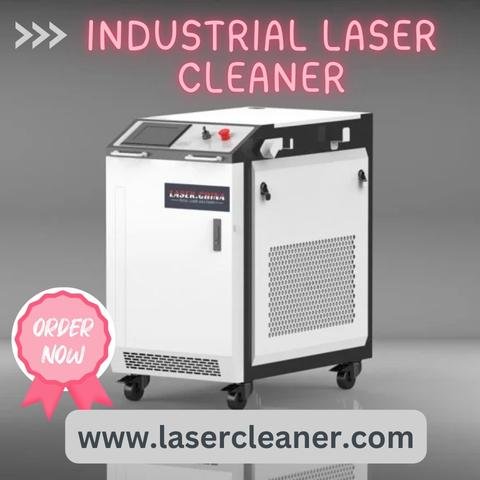
In modern manufacturing, precision, efficiency, and sustainability define success. The industrial laser cleaner has emerged as one of the most effective technologies to address surface preparation and cleaning challenges across multiple industries. It replaces traditional abrasive or chemical cleaning methods with a non-contact, environmentally responsible, and highly accurate solution. Whether removing rust, paint, oxide, or contaminants, laser cleaning technology is revolutionizing how factories maintain production standards and equipment integrity.
The principle behind the industrial laser cleaner is straightforward yet powerful. It utilizes high-energy laser pulses that interact with the material’s surface, vaporizing unwanted layers like rust, paint, grease, or oxidation. Unlike mechanical or chemical processes, the laser beam selectively removes contaminants without damaging the substrate material. This precision makes it suitable for sensitive applications, including aerospace, automotive, shipbuilding, power generation, and even cultural heritage restoration.
How the Industrial Laser Cleaner Works
At its core, the industrial laser cleaner operates using laser ablation — a process that involves directing a focused laser beam onto the surface to be cleaned. When the beam hits the contaminants, the energy absorbed causes rapid heating and vaporization of the undesired layer, which is then expelled in the form of plasma or fine dust. The substrate remains untouched because it reflects most of the laser energy, allowing for controlled and precise cleaning.
The efficiency of the process depends on several factors, such as laser power, pulse duration, wavelength, and the type of material being treated. Industrial models often use fiber lasers due to their high efficiency, durability, and low maintenance requirements. These systems are also easy to integrate into automated production lines, enabling continuous cleaning and preparation processes in high-volume environments.
Applications Across Industries
The versatility of the industrial laser cleaner extends to almost every sector that deals with metal, composite, or coated surfaces. In the automotive industry, laser cleaning is used for preparing surfaces before welding, removing paint during rework, and cleaning molds or dies without disassembly. Manufacturers benefit from improved weld quality and reduced downtime.
In the aerospace sector, precision is everything. The industrial laser cleaner ensures safe removal of oxidation and coatings from aircraft components, turbine blades, and molds. Because it doesn’t rely on chemicals, it helps meet the strict environmental regulations that govern aviation manufacturing and maintenance.
The energy and power generation industries use laser cleaning to remove oxide scales and prepare metal surfaces for coating or bonding. It enhances adhesion and ensures consistent performance in high-temperature and high-pressure environments.
Even the shipbuilding and marine sectors utilize this technology to remove rust and paint from large steel structures and ship hulls. Laser cleaning simplifies maintenance tasks that would otherwise require extensive manual labor or harmful solvents.
Cultural institutions and heritage restoration professionals also benefit from laser cleaning. The non-contact process enables the gentle removal of dirt, carbon deposits, and other pollutants from historical artifacts and monuments without damaging the original surface.
Integration and Automation Potential
Modern industrial laser cleaners are designed for both manual and automated operations. Portable handheld models are ideal for flexible maintenance tasks or fieldwork, while fully automated systems can be integrated into robotic arms or conveyor-based production lines. This flexibility allows manufacturers to achieve consistent cleaning quality while optimizing labor costs and operational efficiency.
Automation plays a significant role in industries aiming for high precision and repeatability. With programmable parameters and real-time monitoring, laser cleaning systems can be adjusted for different materials or contamination levels. Integrated sensors and vision systems further enhance performance by ensuring consistent cleaning across varying surface geometries.
As part of Industry 4.0 transformation, many companies are adopting industrial laser cleaners with digital connectivity and data analytics features. These capabilities allow monitoring of process parameters such as laser intensity, cleaning rate, and surface quality, leading to improved process control and reduced waste.
Environmental and Safety Considerations
The industrial laser cleaner offers a sustainable alternative to traditional cleaning methods. It eliminates the need for abrasive materials, chemical solvents, and extensive waste management. Since the process generates minimal secondary waste — mostly fine dust or vaporized particles — it reduces the environmental impact significantly.
From a safety standpoint, laser cleaning is a controlled process. Enclosed systems and proper fume extraction units ensure that operators are not exposed to harmful residues or emissions. Additionally, since there are no chemical residues or abrasive materials involved, workplace safety standards are easier to maintain.
Energy consumption is another advantage. Laser cleaning systems are energy-efficient compared to large-scale sandblasting or chemical baths. They operate only when needed, which aligns with the sustainability goals of modern manufacturing.
Maintenance and Longevity
Proper maintenance ensures that the industrial laser cleaner delivers consistent performance over years of operation. Regular inspection of optics, cooling systems, and protective lenses prevents energy loss and beam distortion. Since the system has no consumable abrasives or chemicals, operational costs remain low compared to traditional cleaning methods.
Routine calibration and surface testing also help maintain accuracy. Most systems are equipped with self-diagnostic tools that alert operators of alignment issues or temperature fluctuations, simplifying maintenance routines. With proper care, an industrial laser cleaner can operate for tens of thousands of hours with minimal intervention.
The Future of Surface Cleaning
As industries continue to seek cleaner, faster, and more sustainable methods, the industrial laser cleaner is becoming an integral part of modern manufacturing lines. Its ability to handle a wide range of materials and contamination types makes it a preferred choice for companies focused on quality and environmental compliance.
Ongoing research and development are improving laser efficiency, reducing system costs, and expanding application possibilities. As laser power sources become more compact and affordable, smaller manufacturers can now adopt the same technology once limited to large-scale industrial operations.
Future models will likely integrate artificial intelligence for automatic surface recognition, enabling systems to adjust cleaning parameters in real time based on contamination type. This will further enhance precision, reduce operator involvement, and open up new opportunities for fully autonomous cleaning solutions.
Final Thoughts
The industrial laser cleaner represents the evolution of surface treatment — merging precision, sustainability, and automation into one streamlined process. Its role in modern manufacturing continues to expand as industries look for ways to improve efficiency without compromising environmental responsibility.
From restoring heritage artifacts to preparing critical aerospace components, laser cleaning technology demonstrates reliability and innovation at every level. As companies adopt this advanced solution, the industrial landscape is witnessing a shift toward cleaner production, minimal waste, and long-term performance consistency — a future where every surface can be cleaned with accuracy, safety, and environmental integrity.

 English
 Arabic
 French
 Spanish
 Portuguese
 Deutsch
 Turkish
 Dutch
Dutch
 Italiano
 Russian
 Romaian
 Greek
Greek