Ship building companies play a fundamental role in strengthening global marine logistics. With nearly 80–90% of international trade transported by sea, maritime shipping remains the backbone of the global economy. Every industry — from automotive and construction to food and energy — depends on reliable shipping networks. Behind these networks are shipbuilders that design and construct advanced vessels capable of handling massive cargo volumes efficiently and safely.
As global trade grows at an average rate of 3–4% annually, the demand for efficient ships continues to increase. This is where innovation in shipbuilding becomes critical. Modern vessels are not only larger but smarter, more fuel-efficient, and environmentally sustainable, directly improving logistics performance worldwide.
Expanding Capacity and Supporting Trade Growth
Over the last two decades, vessel capacity has significantly expanded. Modern container ships can now carry over 24,000 TEUs (twenty-foot equivalent units), compared to fewer than 8,000 TEUs in the early 2000s. This dramatic increase allows shipping companies to move more goods in a single voyage, reducing transportation costs per unit.
Large-scale production by top shipbuilding companies enables shipping lines to meet rising demand without dramatically increasing fleet size. Higher cargo capacity reduces the number of trips required, lowers fuel consumption per container, and minimizes port congestion. This directly enhances the efficiency of global marine logistics systems.
Companies such as VU Marine focus on engineering vessels that maximize cargo space while maintaining safety, balance, and fuel efficiency — ensuring that marine logistics operations remain smooth and cost-effective.
Fuel Efficiency and Operational Cost Reduction
Fuel expenses account for a large portion of maritime operating costs. Modern shipbuilders improve logistics performance by designing ships with optimized hull shapes, lightweight materials, and advanced propulsion systems.
Improved hydrodynamic hull designs alone can reduce fuel consumption by 10–15%. Additionally, LNG-powered engines, hybrid propulsion systems, and energy-saving devices further enhance operational efficiency. These improvements not only reduce costs but also allow shipping companies to offer competitive freight rates in global markets.
Sustainability is equally important. The maritime sector aims to cut greenhouse gas emissions by at least 50% by 2050 compared to 2008 levels. Shipbuilders contribute significantly by creating eco-friendly vessels that comply with international regulations. Approximately 60–65% of new ships are now designed with recycling and emission reduction in mind.
Technological Advancements and Smart Vessels
Digital transformation has reshaped the shipbuilding industry. Today’s vessels are equipped with advanced systems such as IoT sensors, automated navigation tools, predictive maintenance software, and real-time tracking technologies.
Digital integration in shipyards has improved project efficiency by over 60% and reduced construction timelines by nearly 20%. Faster ship production allows logistics providers to expand fleets quickly and respond to shifts in global trade patterns.
Smart ships enhance marine logistics by optimizing routes, monitoring cargo conditions, and reducing delays. Real-time data helps operators avoid congested shipping lanes and improve scheduling accuracy at ports. These improvements reduce waiting times and lower operational risks.
In regions like the Middle East, ship building companies in UAE are increasingly adopting digital tools and automation to meet global maritime standards. Their technological adoption contributes to improved efficiency across international trade routes.
Faster Port Turnaround and Logistics Coordination
Port delays can significantly disrupt global supply chains. Shipbuilders address this challenge by designing vessels with advanced cargo handling systems and improved deck layouts. Automated cranes, better container stacking systems, and enhanced docking capabilities reduce loading and unloading time.
Modern ship designs can cut port turnaround time by 15–25%, allowing terminals to handle more vessels efficiently. Reduced waiting times translate into faster deliveries and improved global logistics performance.
The integration of ships with modern port infrastructure also strengthens coordination between vessel operators and terminal authorities. Efficient vessel design supports smoother cargo transitions between sea, rail, and road transport networks.
Strengthening Supply Chain Resilience
The global shipbuilding industry is valued at over $50 billion and relies on international supply chains for materials and components. Around 75–80% of ship components are sourced globally. This interconnected structure requires strong coordination and risk management.
Shipbuilders now use advanced supply chain monitoring tools to reduce disruptions and improve resilience. Modular construction methods allow faster assembly and easier repairs, minimizing downtime.
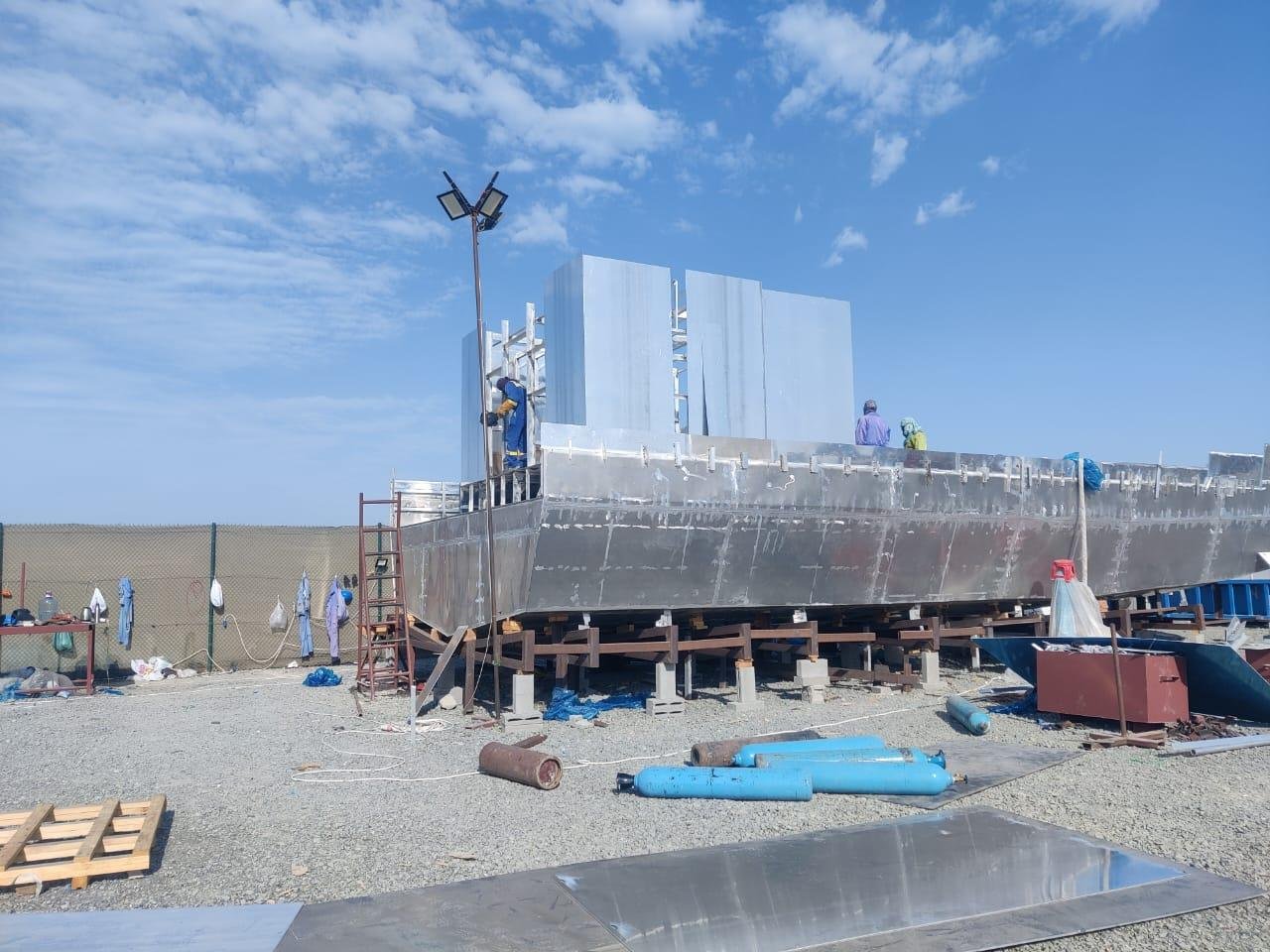
In the Gulf region, ship manufacturing companies in UAE contribute significantly to regional maritime growth by adopting modern construction techniques and strengthening supply chain networks. These advancements help ensure steady vessel availability for global shipping operations.
Supporting Integrated Marine Solutions
Beyond vessel construction, the broader maritime ecosystem depends on strong infrastructure and technical expertise. High-quality marine services in UAE support ship maintenance, retrofitting, inspections, and operational optimization. These services ensure vessels remain efficient throughout their lifecycle, further enhancing global logistics reliability.
Companies like VU Marine emphasize innovation, durability, and performance in ship design. By focusing on long-term operational efficiency, they help shipping operators maintain consistent cargo flow across international waters.
Future Innovations in Shipbuilding
The future of marine logistics will depend heavily on innovation. Autonomous vessels, artificial intelligence-driven navigation systems, and blockchain-based cargo documentation are gradually transforming maritime trade.
Industry projections suggest that autonomous ships could manage up to 10% of global cargo traffic within the next decade. These advancements promise greater safety, reduced human error, and enhanced efficiency in global supply chains.
Shipbuilding companies continue investing in research and development to create future-ready vessels that align with evolving trade demands and sustainability goals.
Conclusion
Shipbuilding companies are the foundation of global marine logistics. Through larger cargo capacities, fuel-efficient designs, digital transformation, and sustainable engineering, they significantly enhance the efficiency and resilience of international trade.
As global commerce continues to expand, the demand for smarter, greener, and more efficient vessels will only grow. With forward-thinking approaches and continuous innovation, companies like VU Marine are contributing to stronger supply chains and smoother maritime operations worldwide — ensuring that global marine logistics remains reliable, cost-effective, and prepared for the future.



 Leader Board

 English
 Arabic
 French
 Spanish
 Portuguese
 Deutsch
 Turkish
 Dutch
Dutch
 Italiano
 Russian
 Romaian
 Portuguese (Brazil)