


 Leader Board
AAAC Conductor: High-Performance Solution for Modern Power Transmission
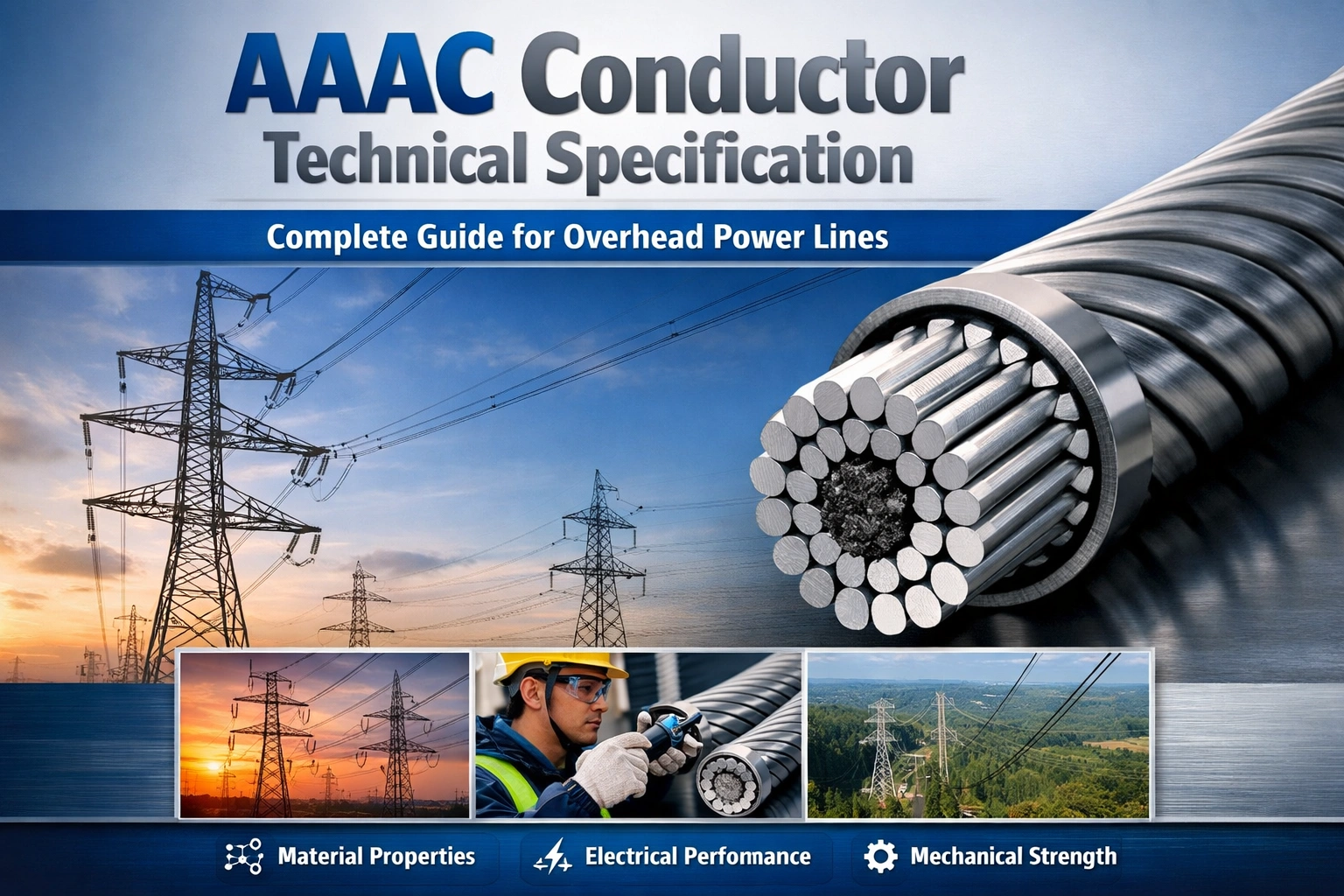
When it comes to efficient, reliable, and long-lasting overhead power transmission, choosing the right conductor is critical. AAAC conductor (All Aluminum Alloy Conductor) has emerged as a preferred choice for utility companies, EPC contractors, and industrial projects worldwide. At HNBF Power, a global leader in manufacturing overhead conductors and power cables, we specialize in producing high-quality AAAC conductors that meet rigorous international standards.
In this article, we will explore and understand the technical advantages, applications, and benefits of AAAC conductors, providing engineers and procurement buyers with insights to make informed decisions for their power transmission projects.
What is an AAAC Conductor?
AAAC stands for All Aluminum Alloy Conductor, a type of overhead conductor designed with high-strength aluminum alloys. Unlike traditional AAC (All Aluminum Conductor) that uses pure aluminum, AAAC combines the excellent conductivity of aluminum with the mechanical strength of alloys.
This design makes AAAC conductor lighter, stronger, and more resistant to environmental factors such as corrosion, fatigue, and high temperatures. Its unique structure allows for longer spans between poles or towers, reducing infrastructure costs and maintenance requirements.
Key Advantages of AAAC Conductor
1. High Strength-to-Weight Ratio
AAAC conductors provide superior mechanical strength while remaining lightweight. This allows for longer span installations, reducing the number of support structures required, and ultimately lowering project costs.
2. Excellent Corrosion Resistance
Manufactured using high-quality aluminum alloys, AAAC conductors resist corrosion even in harsh environmental conditions, including coastal and industrial areas. This enhances the lifespan of transmission lines and minimizes maintenance efforts.
3. Enhanced Electrical Performance
AAAC conductors offer excellent electrical conductivity, ensuring low energy loss over long distances. This improves efficiency in power transmission and reduces operational costs for utilities.
4. Versatility in Applications
AAAC conductors are suitable for a wide range of applications including:
-
Urban and rural power distribution
-
Industrial power networks
-
High-voltage transmission lines
-
Renewable energy projects
Why Choose HNBF Power for AAAC Conductors?
HNBF Power is a trusted global manufacturer of overhead conductors and power cables. Our AAAC conductors are engineered with precision, adhering to international standards such as ASTM and IEC.
Key differentiators include:
-
State-of-the-art manufacturing facilities ensuring consistent quality
-
Customized conductor solutions to meet specific project requirements
-
Technical support for engineers and procurement teams during project planning and execution
By partnering with HNBF Power, clients gain access to high-performance AAAC conductors that deliver both reliability and long-term cost efficiency.
Technical Specifications of AAAC Conductor
HNBF Power offers a wide range of AAAC conductors with varying diameters, cross-sectional areas, and alloy compositions to meet different project needs. Typical features include:
-
Tensile strength ranging from 160–250 MPa
-
Electrical conductivity up to 60–65% IACS
-
Available in multiple standard sizes from 16 mm² to 400 mm²
-
Suitable for both overhead and aerial bundled cable configurations
Our team can assist in selecting the right conductor type and size based on load, span length, and environmental conditions.
Installation and Maintenance Tips
Proper installation is key to maximizing the lifespan of AAAC conductors:
-
Tensioning: Ensure correct tension to prevent sagging or mechanical damage.
-
Alignment: Maintain proper alignment between support structures to avoid undue stress.
-
Regular Inspections: Periodic inspection for corrosion, joint integrity, and conductor wear ensures optimal performance.
With AAAC conductors from HNBF Power, maintenance is minimal due to the inherent durability and corrosion resistance of the alloy.
FAQs About AAAC Conductor
Q1: How does AAAC differ from AAC conductor?
A1: AAAC uses aluminum alloys for enhanced mechanical strength, whereas AAC uses pure aluminum. AAAC is stronger, lighter, and more resistant to environmental stress.
Q2: Can AAAC conductors be used in coastal areas?
A2: Yes, AAAC’s corrosion resistance makes it ideal for coastal and industrial environments.
Q3: What are the typical sizes available for AAAC conductors?
A3: Sizes range from 16 mm² up to 400 mm², with custom solutions available.
Q4: How long can AAAC conductors span between towers?
A4: Depending on size and tension, AAAC conductors can span 200–400 meters or more, reducing the number of support structures.
Q5: Does HNBF Power provide technical support for installation?
A5: Yes, our team assists engineers and procurement teams with design, specification, and installation guidance.
Conclusion
For modern power transmission and distribution projects, AAAC conductor is an ideal choice that combines strength, reliability, and efficiency. HNBF Power offers premium AAAC conductors tailored to your project requirements, ensuring high performance and long-term durability.
Whether you’re planning urban power networks, industrial installations, or large-scale transmission projects, our team can provide customized solutions to meet your exact needs.
Contact HNBF Power today to discuss your AAAC conductor requirements and explore how we can deliver high-quality, cost-effective solutions for your next project.

 English
 Arabic
 French
 Spanish
 Portuguese
 Deutsch
 Turkish
 Dutch
Dutch
 Italiano
 Russian
 Portuguese (Brazil)
 Greek
Greek