


 Leader Board

-
10 Posts
-
1 Photos
-
0 Videos
-
14/10/1950
-
Followed by 0 people
Search


 Arabic
 French
 Spanish
 Portuguese
 Deutsch
 Turkish
 Dutch
Dutch
 Italiano
 Russian
 Romaian
 Portuguese (Brazil)
 Greek
Greek
Recent Updates
-
What Is Extended Producer Responsibility (EPR) in India — And Why Businesses Can’t Ignore It Anymore
Most Indian businesses don’t learn about EPR from a policy update.
They learn about it from a notice, a delayed shipment, or a sudden question from an investor.
Sales are going well. Products are in the market.
Then someone asks, “Do you have EPR registration?”
That’s usually where the confusion starts.
Extended Producer Responsibility (EPR) isn’t a sustainability buzzword. In India, it’s a legal obligation. If you manufacture, import, or sell products that generate plastic waste, e-waste, or battery waste, the responsibility doesn’t end at the point of sale.
What EPR Really Means for Business Owners
In simple terms, EPR means this:
If your product creates waste, you are responsible for what happens after the customer is done using it.
The law expects producers to ensure that waste is collected, recycled, or safely processed — year after year. This responsibility applies to manufacturers, importers, brand owners, e-commerce sellers, startups, and even foreign brands selling in India.
What catches many businesses off guard is that EPR is not about company size or turnover. It’s about product category. Even a growing startup or a single-product importer can fall under EPR without realising it.
Why EPR Becomes a Problem Only When It’s Delayed
Most businesses don’t ignore EPR intentionally. They assume it’s a one-time registration or something they can deal with later.
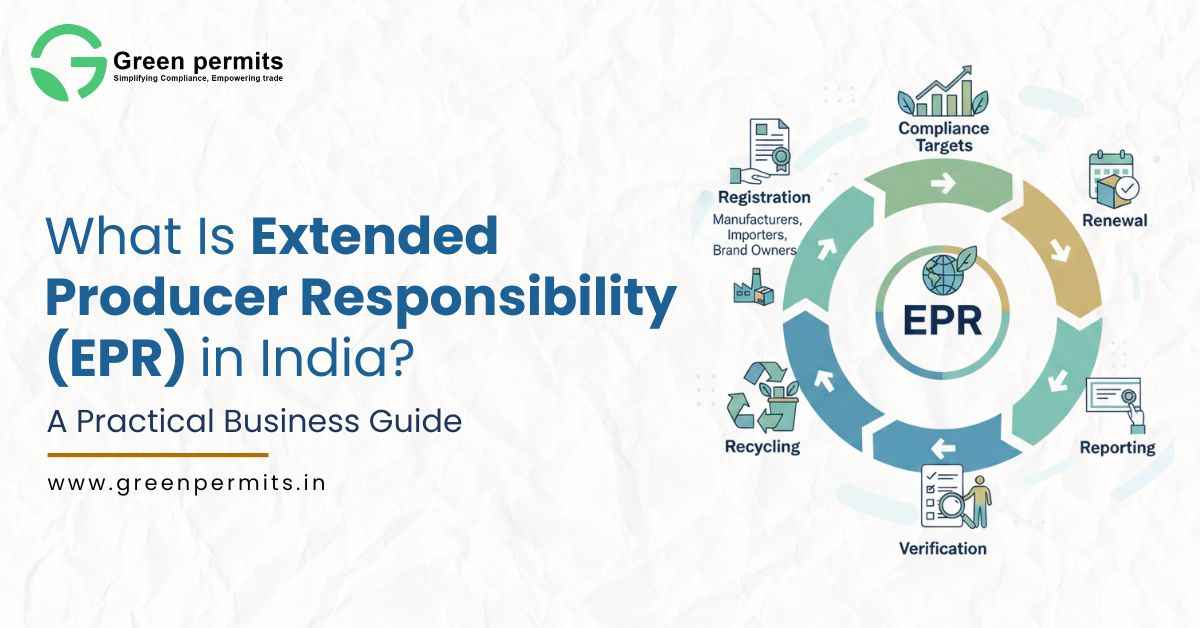
But EPR is an ongoing compliance cycle — registration, annual targets, recycler coordination, certificates, and return filings. When this is delayed, the impact is real: blocked portals, import delays, penalties, and uncomfortable compliance conversations.
I’ve seen many businesses handle EPR only after it becomes urgent. Almost every time, it costs more money, more time, and far more stress than addressing it early.
Why Planning EPR Early Actually Makes Life Easier
When EPR is planned upfront, it stops being a disruption.
Compliance becomes predictable. Costs are controlled. Operations continue without interruptions. And the business stays audit-ready for regulators, customers, and investors.
At Green Permits, we help businesses treat EPR as part of normal operations — not a last-minute emergency. The goal isn’t just registration, but peace of mind.
Article Link - https://www.greenpermits.in/extended-producer-responsibility-epr-in-india/
If you’re unsure whether EPR applies to your business, that uncertainty itself is usually the first sign that it’s time to check.
+91 78350 06182
wecare@greenpermits.in
Environmental compliance should never come as a surprise.What Is Extended Producer Responsibility (EPR) in India — And Why Businesses Can’t Ignore It Anymore Most Indian businesses don’t learn about EPR from a policy update. They learn about it from a notice, a delayed shipment, or a sudden question from an investor. Sales are going well. Products are in the market. Then someone asks, “Do you have EPR registration?” That’s usually where the confusion starts. Extended Producer Responsibility (EPR) isn’t a sustainability buzzword. In India, it’s a legal obligation. If you manufacture, import, or sell products that generate plastic waste, e-waste, or battery waste, the responsibility doesn’t end at the point of sale. What EPR Really Means for Business Owners In simple terms, EPR means this: If your product creates waste, you are responsible for what happens after the customer is done using it. The law expects producers to ensure that waste is collected, recycled, or safely processed — year after year. This responsibility applies to manufacturers, importers, brand owners, e-commerce sellers, startups, and even foreign brands selling in India. What catches many businesses off guard is that EPR is not about company size or turnover. It’s about product category. Even a growing startup or a single-product importer can fall under EPR without realising it. Why EPR Becomes a Problem Only When It’s Delayed Most businesses don’t ignore EPR intentionally. They assume it’s a one-time registration or something they can deal with later. But EPR is an ongoing compliance cycle — registration, annual targets, recycler coordination, certificates, and return filings. When this is delayed, the impact is real: blocked portals, import delays, penalties, and uncomfortable compliance conversations. I’ve seen many businesses handle EPR only after it becomes urgent. Almost every time, it costs more money, more time, and far more stress than addressing it early. Why Planning EPR Early Actually Makes Life Easier When EPR is planned upfront, it stops being a disruption. Compliance becomes predictable. Costs are controlled. Operations continue without interruptions. And the business stays audit-ready for regulators, customers, and investors. At Green Permits, we help businesses treat EPR as part of normal operations — not a last-minute emergency. The goal isn’t just registration, but peace of mind. Article Link - https://www.greenpermits.in/extended-producer-responsibility-epr-in-india/ If you’re unsure whether EPR applies to your business, that uncertainty itself is usually the first sign that it’s time to check. 📞 +91 78350 06182 📧 wecare@greenpermits.in Environmental compliance should never come as a surprise.0 Comments 0 Shares 199 Views

More Stories
Sponsored