


 Leader Board
Explaining the Increasing Popularity of Gasoline Scooter and Motorcycle in India
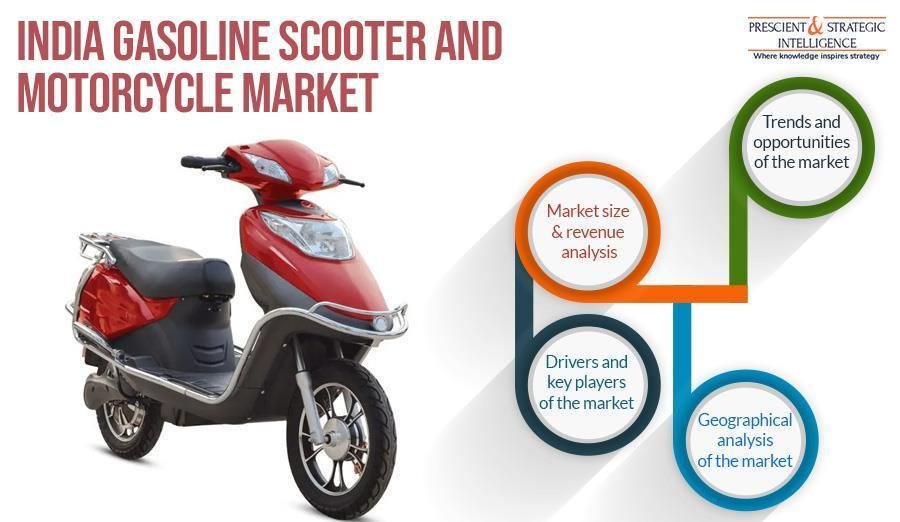
India is a growing economy with the world recognizing its potential. With the rising per capita income of the Indian middle-class population, their purchasing power has also increased. Considering the comfort and ease that two-wheelers provide, most middle-class households try and acquire at least one two-wheeler for running errands, etc.
Where earlier scooter was the favorite two-wheeler of Indian buyers, the trend changed over the past 20 years and the Indian bike sector saw a great boom.
Why the Indian Population Prefers Two-Wheelers?
Both of these automobiles are driven by gasoline, they have two wheels and are lighter and smaller than passenger vehicles. This makes them an ideal choice to drive on the congested and crowded roads of India.
A key difference between these two vehicles is that the engine in a motorcycle is generally fitted to the frame. The engine scooter, on the other hand, is generally a component of rear suspension. Moreover, motorcycles are often more powerful and heavier as compared to scooters.
Motorcycles and scooters are affordable and convenient. Thus, people who don't want to spend too much money on a car can spend on such vehicles. In addition, even with rising fuel prices, people still prefer gasoline two-wheelers over cars running on the same fuel because:
- Works on lesser fuel.
- Gives higher mileage.
- Convenient to park.
- Takes up less space in the house and can be parked inside.
Reasons for Growth of Two-Wheeler Vehicles in India
India is one of the largest two-wheeler producers across the globe. Some reasons for this large-scale manufacturing include:
Stringent Government Policy Towards Automobile Manufacturing Sector
The Indian government has always been pretty aggressive with its tax laws towards foreign investors trying to foray into the automobile sector in India. This gave a huge leverage to internal two-wheeler producers.
- Growing Need for Personal Transport
With the rising disposable income, the purchasing power of Indian buyers has increased. Considering the ease that two-wheelers provide, most Indians lean towards two-wheeler vehicles.
- Inefficiency of the Indian Public Transportation System
Inadequate urban public transportation facilities leave the Indian lower middle-class population in a lurch. Two-wheeler vehicles come to the rescue of many in such a situation.
History of Two-Wheeler Vehicles in India
It all began when Bajaj Auto Limited began trading Vespa scooters in 1948, by importing them. In 1960, Bajaj started the manufacturing in collaboration with Piaggio & C. SpA of Italy.
Earlier, foreign companies were not allowed to operate in India. And the manufacturing was so slow that the waiting period went up to as high as 12 years. The two-wheeler sector was opened to foreign competition in the mid-80s.
The two-wheeler sector in India went slow in the 50s, 60s, and 70s due to Government restrictions. The two-wheeler sector saw sudden progress in the 80s due to relaxed foreign intrusion.
Coming to an End
With the increasing income levels, coupled with the surging need for gasoline scooters and motorcycles in both tier 3 and tier 2 cities, their demand will continue to surge in the years to come.


 English
 Arabic
 French
 Spanish
 Portuguese
 Deutsch
 Dutch
Dutch
 Italiano
 Russian
 Romaian
 Portuguese (Brazil)
 Greek
Greek