


 Leader Board
Israel Pesticides Market Expanding Amid Advanced Farming Solutions
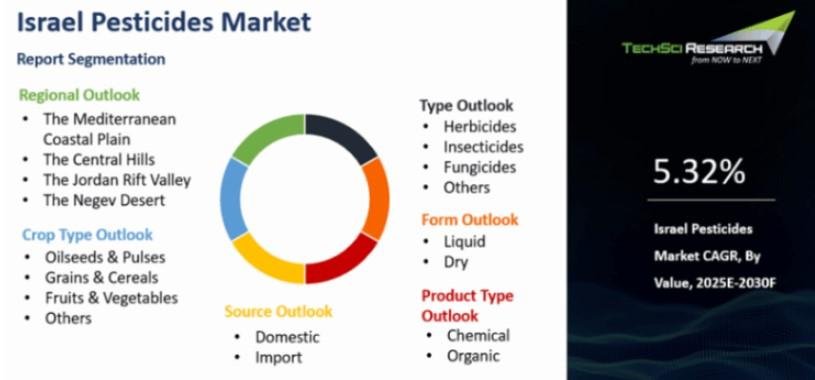
Israel Pesticides Market growth is driven by intensive farming, advanced Agritech, and rising demand for higher crop yields, 2026-2030.
According to TechSci Research, the Israel Pesticides Market was valued at USD 115.21 Million in 2024 and is expected to reach USD 157.62 Million by 2030, growing at a CAGR of 5.32%. This growth reflects the country’s emphasis on precision agriculture, innovative pest management, and sustainable farming practices.
Market Overview
Israel’s pesticide market is undergoing a dynamic transformation, shaped by:
-
Technological Advancements: AI-driven monitoring, drone-based spraying, and smart sensors
-
Regulatory Pressures: Stricter pesticide usage norms to protect human health and the environment
-
Environmental Concerns: Shift toward biopesticides and low-toxicity alternatives
-
Evolving Agricultural Practices: High-intensity and precision-driven farming to maximize yields
With limited arable land, scarce water resources, and a growing population, pesticides are crucial for sustaining crop productivity and meeting domestic and export demands.
Key Market Drivers
High-Intensity Farming Practices
Israel’s intensive farming model maximizes productivity on every square meter. The demand for herbicides, insecticides, and fungicides is particularly strong in regions such as the Negev Desert, Mediterranean Coastal Plain, and Jordan Rift Valley, where large-scale agricultural operations dominate.
Greenhouse farming, hydroponics, and precision irrigation systems further increase pesticide usage. Liquid formulations are preferred for automated application through irrigation systems, improving efficiency and minimizing waste.
Regulatory and Environmental Factors
Government regulations are restricting certain chemical pesticides to protect human health and the environment. This has accelerated demand for biopesticides, microbial-based formulations, and pheromone-based pest control methods. Although effective, these alternatives are more expensive and require farmers to adapt to new pest management practices, leading to gradual adoption.
Technological Innovation
Israel’s agritech ecosystem is central to pesticide market evolution. Innovations include:
-
AI-driven pest detection and predictive analytics
-
Drone-assisted spraying for targeted applications
-
Smart sensors for real-time monitoring
These technologies enable precision agriculture, reducing pesticide usage while maximizing effectiveness and minimizing environmental impact. Currently, adoption is higher among large-scale commercial farms compared to smaller operations due to investment requirements.
Climate Change Impacts
Changing weather patterns are affecting pest populations and disease prevalence. Rising temperatures and unpredictable rainfall are causing new infestations and faster breeding cycles, increasing the demand for broad-spectrum and fast-acting pesticides.
Pesticide runoff, soil degradation, and water contamination in arid areas like the Negev Desert are pushing the market toward low-toxicity and environmentally friendly solutions.
Future Market Outlook
The Israel Pesticides Market is expected to remain robust, supported by:
-
Continued government support for sustainable agriculture
-
Growth of biopesticides and integrated pest management (IPM) strategies
-
Adoption of smart farming technologies (AI, IoT, robotics)
-
Increasing demand for residue-free produce for export markets
The balance between chemical and biological pesticides will gradually shift, with innovative, environmentally friendly products gaining prominence.
Product Segmentation
By Type
Herbicides are the fastest-growing segment, dominating over insecticides and fungicides. Key growth drivers include:
-
High-intensity crop cultivation requiring efficient weed management
-
Limited arable land and water, necessitating maximum productivity per square meter
-
Support for minimum tillage and conservation agriculture, critical for Israel’s semi-arid climate
Herbicides are essential in open-field and greenhouse farming, providing broad-spectrum weed control and cost-effective crop protection. They also enhance soil moisture retention and prevent erosion, aligning with sustainable farming practices.
By Crop Type
Israel cultivates a variety of high-value crops, including wheat, corn, citrus fruits, vegetables, and vineyards. Effective weed, pest, and disease management is vital for maintaining high yields and product quality. Herbicides, insecticides, and fungicides are strategically applied before and during planting seasons to ensure optimal growth cycles.
Browse over XX market data Figures spread through XX Pages and an in-depth TOC on "Israel Pesticides Market”
https://www.techsciresearch.com/report/israel-pesticides-market/14333.html
Regional Insights
Mediterranean Coastal Plain
The Mediterranean Coastal Plain is the second-most dominant region in Israel’s pesticide market. Factors driving demand include:
-
Fertile soils and favorable climate supporting high agricultural output
-
Large-scale cultivation of fruits, vegetables, and field crops
-
Dense vegetation and proximity to agricultural hubs creating ideal conditions for pests, weeds, and fungal infections
High-value crops like citrus fruits, avocados, bananas, strawberries, and vineyards require frequent pest and disease management. Fungicides combat diseases such as powdery mildew, downy mildew, and botrytis, while insecticides target pests like whiteflies, aphids, and fruit flies.
Integrated pest management (IPM) strategies combine chemical and biological control methods to ensure crop protection while minimizing environmental impact.
Other Key Regions
-
Negev Desert: Arid conditions necessitate targeted pesticide use in irrigated and greenhouse farming.
-
Jordan Rift Valley: Large-scale agricultural operations rely on precision pesticide applications.
Challenges and Opportunities
Adoption Barriers
-
Limited awareness among smallholder farmers regarding biopesticides and advanced formulations
-
High costs of next-generation products restricting access for smaller farms
Opportunities
-
Development of eco-friendly and biodegradable pesticides
-
Integration with precision agriculture tools for efficient, targeted applications
-
Expansion of AI-driven pest monitoring and drone-based spraying technologies
These innovations present opportunities for agritech firms and investors in the Israeli pesticide sector.
Conclusion
The Israel Pesticides Market is set for sustained growth through 2030, driven by a combination of technological innovation, regulatory support, and high-intensity agricultural practices.
Farmers are increasingly adopting smart farming methods, balancing chemical and biological pesticides to maintain soil health, enhance crop yields, and meet global export standards. With the integration of AI, IoT, and robotics, Israel remains a leader in precision agriculture, showcasing how technology and sustainability can coexist in modern crop protection.
Major companies operating in the Israel Pesticides Market are:
Grow Group Israel Ltd.
BioCloud Ltd.
Adama Agricultural Solutions Ltd.
ICL Group Ltd.
Lidorr Elements Ltd.
Bayer Israel Ltd.
BASF Israel Ltd.
Hamashbir Agriculture Ltd.
Agrimor Israel Ltd.
Dow Material Sciences Ltd.
Download Free Sample Report
https://www.techsciresearch.com/sample-report.aspx?cid=14333
Customers can also request 10% free customization on this report
“The future of the Israel Pesticides Market will be shaped by technological advancements, regulatory shifts, and increasing demand for sustainable solutions. While chemical pesticides will continue to dominate, stricter government regulations and international residue limits will accelerate the transition toward biopesticides and integrated pest management (IPM) strategies. AI-driven pest detection, drone-based spraying, and precision agriculture will enhance efficiency, reducing pesticide overuse and environmental impact. As climate change alters pest dynamics, farmers will require adaptive and innovative pest control solutions.
Additionally, the growing demand for organic produce and residue-free exports will push the adoption of low-toxicity and eco-friendly alternatives. Overall, Israel’s pesticide market will remain strong, driven by innovation, sustainability, and evolving agricultural needs.,” said Mr. Karan Chechi, Research Director of TechSci Research, a research-based management consulting firm.
“Israel Pesticides Market By Type (Herbicides, Insecticides, Fungicides, Others), By Form (Liquid and Dry), By Product Type (Chemical and Organic), By Crop Type (Oilseeds & Pulses, Grains & Cereals, Fruits & Vegetables, Others), By Source (Domestic and Import), By Region, Competition, Forecast & Opportunities, 2020-2030F", has evaluated the future growth potential of Israel Pesticides Market and provides statistics & information on market size, structure and future market growth. The report intends to provide cutting-edge market intelligence and help decision-makers take sound investment decisions. Besides, the report also identifies and analyzes the emerging trends along with essential drivers, challenges, and opportunities in Israel Pesticides Market.
Contact
TechSci Research LLC
420 Lexington Avenue, Suite 300,
New York, United States- 10170
Tel: +1-332-258-6602
Email: sales@techsciresearch.com
Website: www.techsciresearch.com

 English
 Arabic
 French
 Spanish
 Deutsch
 Turkish
 Dutch
Dutch
 Italiano
 Russian
 Romaian
 Portuguese (Brazil)
 Greek
Greek