


 Leader Board
PRP Hair Restoration vs Hair Transplant: Key Differences Explained
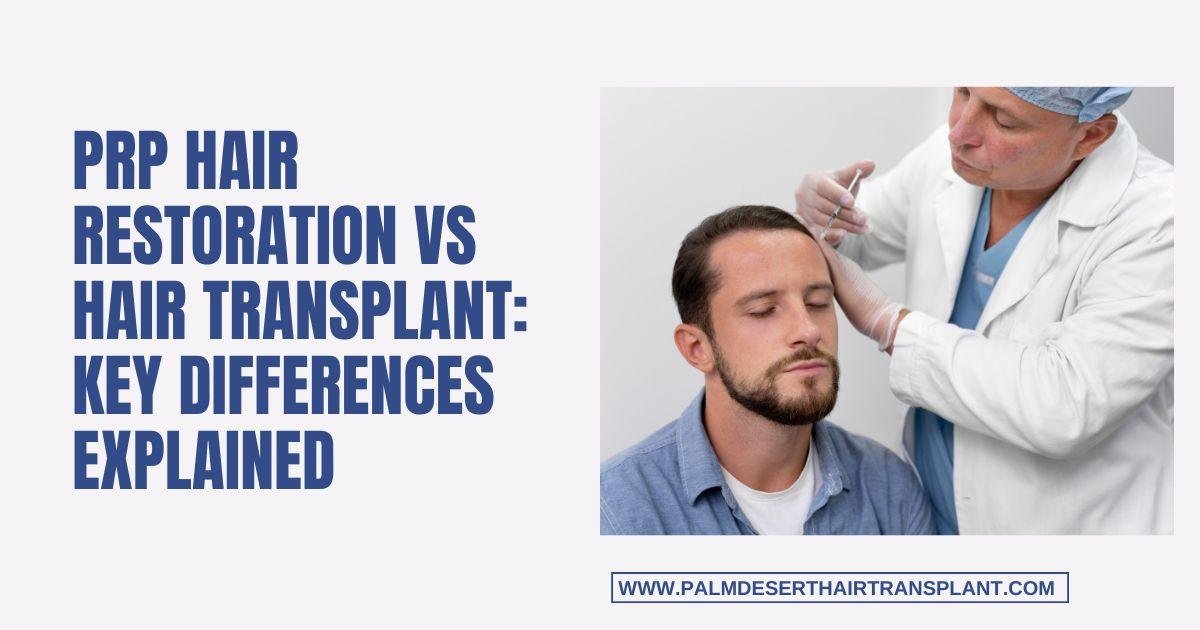
Hair loss affects millions of men and women worldwide, leading many to seek effective medical solutions rather than temporary cosmetic fixes. Among the most popular options today are PRP Hair Restoration and hair transplant surgery. While both therapies aim to improve hair growth and appearance, they work in very different ways and are suited for various stages of hair loss. Selecting the right option can significantly impact your results, recovery time, and long-term satisfaction. Understanding how PRP Hair Restoration compares to hair transplant procedures allows patients to set realistic expectations and make informed decisions. This article describes the key differences between these two treatments to help you determine which solution best fits your hair loss condition and goals.
Understanding PRP Hair Restoration
PRP Hair Restoration is a non-surgical therapy that uses the patient’s own blood to encourage natural hair growth. PRP stands for Platelet-Rich Plasma, which contains growth factors known to support tissue repair and cell regeneration. During the process, a small amount of blood is drawn, processed to concentrate the platelets, and injected into areas of thinning hair on the scalp.
PRP Hair Restoration works by improving blood supply to hair follicles, strengthening existing hair, and encouraging dormant follicles to re-enter the growth phase. It does not create new hair follicles but enhances the health and thickness of existing ones. This therapy is best suited for individuals experiencing early-stage hair thinning or hair shedding.
What Is a Hair Transplant?
A hair transplant is a surgical procedure that restores hair in areas where follicles are no longer active. It involves removing healthy hair follicles from a donor area, typically the back or sides of the scalp, and injecting them into bald or thinning areas.
The two most common techniques are FUE (Follicular Unit Extraction) and FUT (Follicular Unit Transplantation). Hair transplants provide permanent results because the transplanted follicles are genetically resistant to hair loss. This option is usually recommended for patients with moderate to advanced hair loss, with significant thinning or bald patches.
PRP Hair Restoration vs Hair Transplant: Core Differences
The primary difference between PRP Hair Restoration and a hair transplant lies in their process. PRP is non-surgical and minimally invasive, while a hair transplant is a surgical procedure. PRP requires little to no downtime, whereas hair transplant recovery may take several weeks.
PRP Hair Restoration focuses on strengthening existing hair, while a hair transplant replaces lost hair by redistributing follicles. Pain and despair are generally minimal with PRP, while hair transplants may involve mild post-operative discomfort. These differences make PRP suitable for early intervention, and hair transplants ideal for more advanced cases.
Results and Effectiveness
PRP Hair Restoration provides gradual improvements rather than immediate changes. Patients typically notice reduced shedding and thicker hair after several sessions, with results becoming visible within 3 to 6 months. However, PRP results are not permanent and require maintenance treatments. Clinics such as Palm Desert Hair Transplant offer physician-guided PRP therapies designed to stimulate healthier, stronger hair growth using advanced medical protocols.
Hair transplant outcomes take longer to develop fully, usually between six and twelve months, but they are permanent. Transplanted hair grows naturally and can be cut, styled, and maintained like normal hair. While PRP improves hair quality, hair transplants provide visible restoration in bald areas, especially when performed at experienced centers like Palm Desert Hair Transplant, where personalized treatment plans help maximize long-term results.
Ideal Candidates for Each Treatment
PRP Hair Restoration is best suited for men and women with early hair thinning, mild hair loss, or weakened hair follicles. It is also a good option for patients looking to slow down hair loss or improve hair density without surgery.
Hair transplants are ideal for individuals with significant hair loss, receding hairlines, or bald patches where follicles are no longer active. A consultation with a specialist is required to determine which treatment aligns with your hair loss stage and expectations.
Cost Comparison and Maintenance
PRP Hair Restoration generally costs less per session than a hair transplant but requires multiple sessions and ongoing maintenance. Most patients need three to four initial sessions followed by periodic treatments to maintain results.
Hair transplants involve a higher one-time cost but usually do not require repeated procedures. From a long-term perspective, hair transplants offer better value for individuals with advanced hair loss, while PRP can be cost-effective for early intervention.
Can PRP and Hair Transplant Be Combined?
Yes, PRP Hair Restoration is often combined with hair transplant procedures to enhance results. PRP can improve graft survival, accelerate healing, and strengthen existing hair surrounding transplanted areas. Many specialists recommend PRP as a complementary therapy for optimal outcomes.
Conclusion
Both PRP Hair Restoration and hair transplant procedures are effective solutions for hair loss when chosen appropriately. PRP Hair Restoration is ideal for early-stage hair thinning and patients seeking a non-surgical approach, while hair transplants provide permanent solutions for advanced hair loss. Understanding the differences in process, results, cost, and maintenance helps patients make informed decisions. The best treatment depends on individual hair loss patterns, goals, and expectations. Consulting with a qualified hair restoration specialist ensures a personalized treatment plan that delivers safe, natural, and long-lasting results.

 English
 Arabic
 French
 Spanish
 Portuguese
 Deutsch
 Dutch
Dutch
 Italiano
 Russian
 Romaian
 Portuguese (Brazil)
 Greek
Greek