


 Leader Board
Spot Welding Equipment: Principles, Applications & Best Practices for Modern Manufacturing
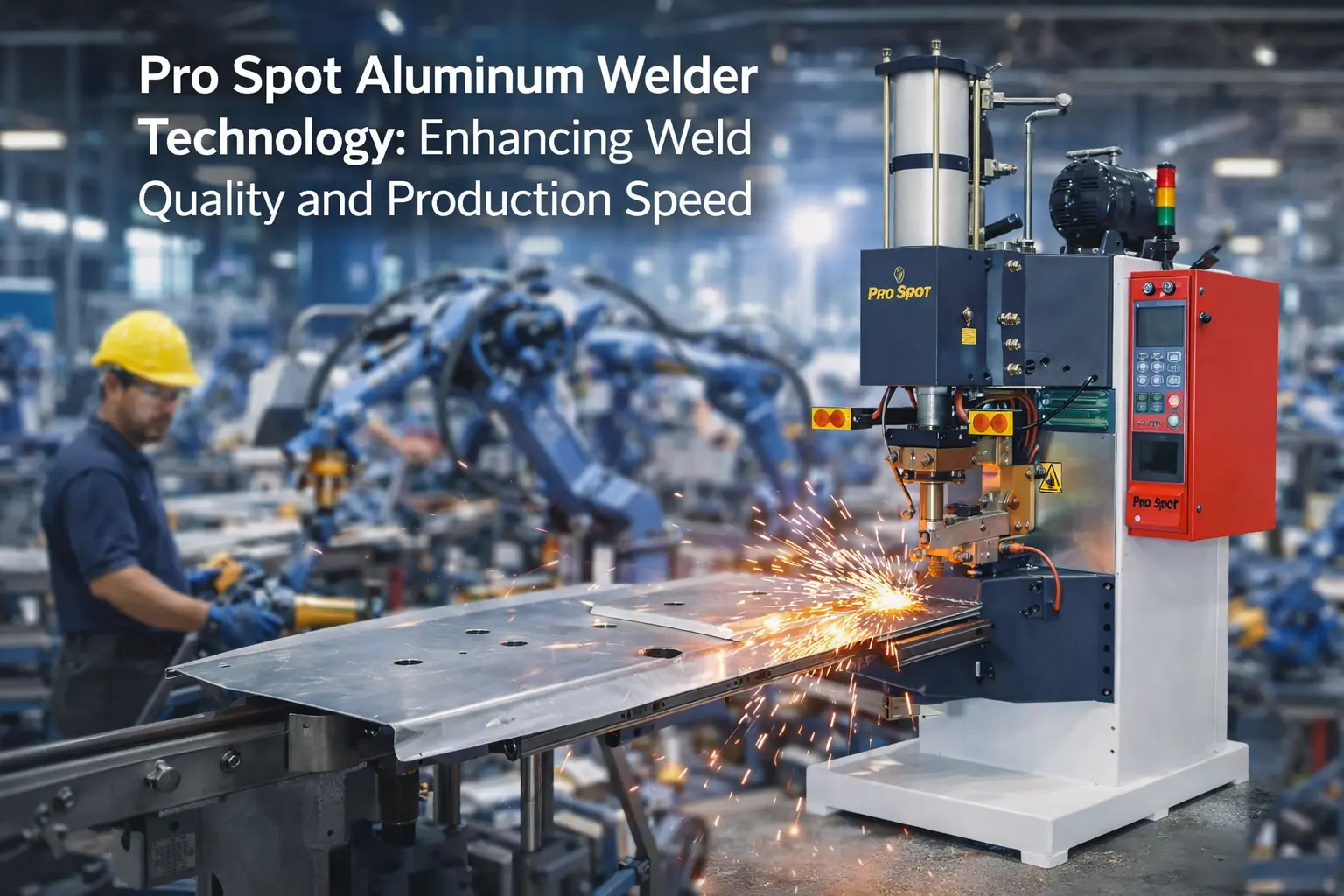
In high‑speed production environments from automotive body shops to electronics assembly lines spot welding equipment plays a pivotal role in creating strong, repeatable metal joints with precision and efficiency. As manufacturers strive for higher throughput, tighter tolerances, and integrated automation, understanding the fundamentals and selecting the right technology becomes critical.
In this article, we’ll explore the core principles of spot welding, where it’s applied, how spot welding machines differ, and practical best practices for optimizing process performance all through the lens of real‑world industrial demands.
What Is Spot Welding? The Basics Explained
Spot welding is a form of resistance welding in which two or more metal sheets are joined by applying pressure and passing a high‑current electrical pulse through localized contact points.
The key elements are:
-
Electrodes – Typically copper alloy tips conduct current while applying force.
-
Workpieces – Usually low‑carbon steel, stainless steel, or aluminum sheets.
-
Current & Force – A controlled electrical current generates heat at the interface, and pressure consolidates the molten zone into a solid weld.
When properly controlled, the heat generated by electrical resistance melts the metal at discrete spots, creating strong metallurgical bonds without filler materials.
The Physics Behind the Process
At the heart of spot welding is Joule’s Law heat generation is proportional to the square of current times resistance (H ∝ I²R). In practical terms:
-
Higher current increases heat rapidly.
-
Short weld times focus heat at target locations, minimizing thermal distortion.
-
Clamping force ensures good electrical contact and controls nugget size.
Modern spot welding machines use microprocessor‑based controllers to precisely regulate current profiles, weld time, and force sequencing improving part quality and reducing rework.
Core Applications of Spot Welding Equipment
Spot welding remains a cornerstone process across multiple industries:
Automotive & EV Manufacturing
The automotive sector is the most prolific user of spot welding equipment. Typical applications include:
-
Body‑in‑white assembly
-
Door and hood panels
-
Frame and sub‑assembly joining
As vehicles shift toward lightweight materials like aluminum and advanced high‑strength steels (AHSS), spot welding systems must deliver adaptive control strategies and advanced electrode materials to maintain joint integrity.
Electronics & Appliances
Small, precise spot welds are essential for:
-
Battery tab welding in lithium‑ion packs
-
Chassis and bracket attachment in electronics
-
Sheet metal assemblies in white goods
Compact, repeatable spot welding systems with fast charge/discharge controls are preferred in high‑volume electronics production.
HVAC & Sheet Metal Fabrication
In HVAC units, ductwork, and enclosure fabrication, spot welding provides:
-
Fast joining of thin gauge sheets
-
Minimal surface disruption
-
Integration with roller feed and automation
For manufacturers focused on cycle time and aesthetics, well‑tuned spot welding equipment delivers consistent weld quality with minimal surface marking.
Types of Spot Welding Machines
Selecting the right spot welding system depends on throughput, material type, and automation needs:
1. Manual Spot Welding Machines
Ideal for small batches or repair work, manual guns require operator control for positioning and actuation. While cost‑effective, they depend on operator skill for consistency.
2. Semi‑Automatic Spot Welders
These systems automate the welding cycle but require manual part placement. They balance productivity with flexibility.
3. Fully Automated Spot Welding Cells
Integrated into robotic or conveyor systems, automated spot welding solutions offer:
-
Precision repeatability
-
High throughput
-
Closed‑loop process monitoring
Automation integrators frequently pair these systems with robotic manipulators, vision guidance, and inline inspection for zero‑defect strategies.
Key Performance Metrics & Quality Indicators
Achieving robust spot welds demands attention to measurable parameters:
| Metric | What It Means |
|---|---|
| Weld Nugget Size | Correlates with mechanical strength |
| Upslope / Downslope Control | Smooth current ramp reduces electrode wear |
| Electrode Force | Proper clamping reduces expulsion |
| Current Monitoring | Ensures consistency across parts |
Advanced controllers log these metrics in real time, enabling traceability and quality audits essential for automotive and aerospace supply chains.
Material Challenges: Steels vs. Aluminum
Spot welding steel and aluminum differ fundamentally:
-
Steel (including AHSS) – Higher electrical resistance simplifies heating, but requires tighter control to avoid expulsion.
-
Aluminum – High thermal conductivity and lower resistance demand higher currents and larger electrodes to achieve adequate heat.
Choosing the right machine with sufficient current capacity and adaptive control improves weld reliability across materials.
Best Practices for Reliable Spot Welding
For engineers and plant managers aiming to maximize uptime and quality, consider these best practices:
Optimize Electrode Geometry
Electrode cap shape and material significantly influence current density and heat distribution. Regular resurfacing extends electrode life and maintains weld quality.
Use Adaptive Weld Control
Modern weld controllers adjust parameters dynamically based on part variation or material changes improving first‑pass yield.
Implement Predictive Maintenance
Monitor transformer temperature, water flow, and electrode wear to avoid unscheduled downtime.
Train Operators and Integrators
Technical understanding of process variables current, force, time enhances decision‑making when scaling production or troubleshooting issues.
Heron Welder: Industrial Expertise in Spot Welding Equipment
At Heron Welder (https://heron‑welder.com), we understand that manufacturing challenges demand more than off‑the‑shelf machines they require engineered solutions that deliver performance, longevity, and integration readiness.
Our product portfolio includes:
-
High‑precision spot welding machines with MFDC and capacitor discharge power supplies
-
Robotic spot welding cells for automotive and heavy fabrication
-
Stationary and portable welding guns optimized for diverse production layouts
-
Advanced controllers enabling adaptive process control and data logging
What sets Heron apart is our commitment to application engineering: we partner with OEMs and automation integrators to specify, prototype, and validate welding systems that meet exact production requirements.
Whether you’re welding aluminum battery tabs, joining AHSS body panels, or automating high‑volume sheet metal assembly, Heron’s solutions blend power, control, and serviceability.
Frequently Asked Questions (FAQs)
What materials can be spot welded?
Spot welding is most effective on steels (including AHSS), stainless steels, and some aluminum alloys. Material thickness and conductivity affect parameter selection.
How do I know if my welding process is optimized?
Track metrics like nugget size consistency, electrode wear rates, and rejection trends. Process monitoring systems can benchmark performance against historical data.
Can spot welding be automated?
Yes. Spot welding integrates effectively with robotic systems, conveyors, and vision guidance for high‑speed, low‑variability manufacturing.
What’s the difference between MFDC and traditional AC spot welders?
MFDC spot welders provide cleaner current profiles, better control, and reduced electromagnetic interference ideal for sensitive or high‑precision applications.
How often should electrodes be replaced?
It depends on material type, weld schedule, and duty cycle. Routine inspection and resurfacing extend life and improve weld consistency.
Ready to Improve Your Spot Welding?
If you’re evaluating spot welding equipment or planning to automate your welding process, Heron Welder can help you engineer the right solution for your factory’s needs.
Request a quote or consult with our experts today to optimize your welding line, improve quality, and maximize throughput with industry‑proven spot welding technologies.

 Arabic
 French
 Spanish
 Portuguese
 Deutsch
 Turkish
 Dutch
Dutch
 Italiano
 Russian
 Romaian
 Portuguese (Brazil)
 Greek
Greek